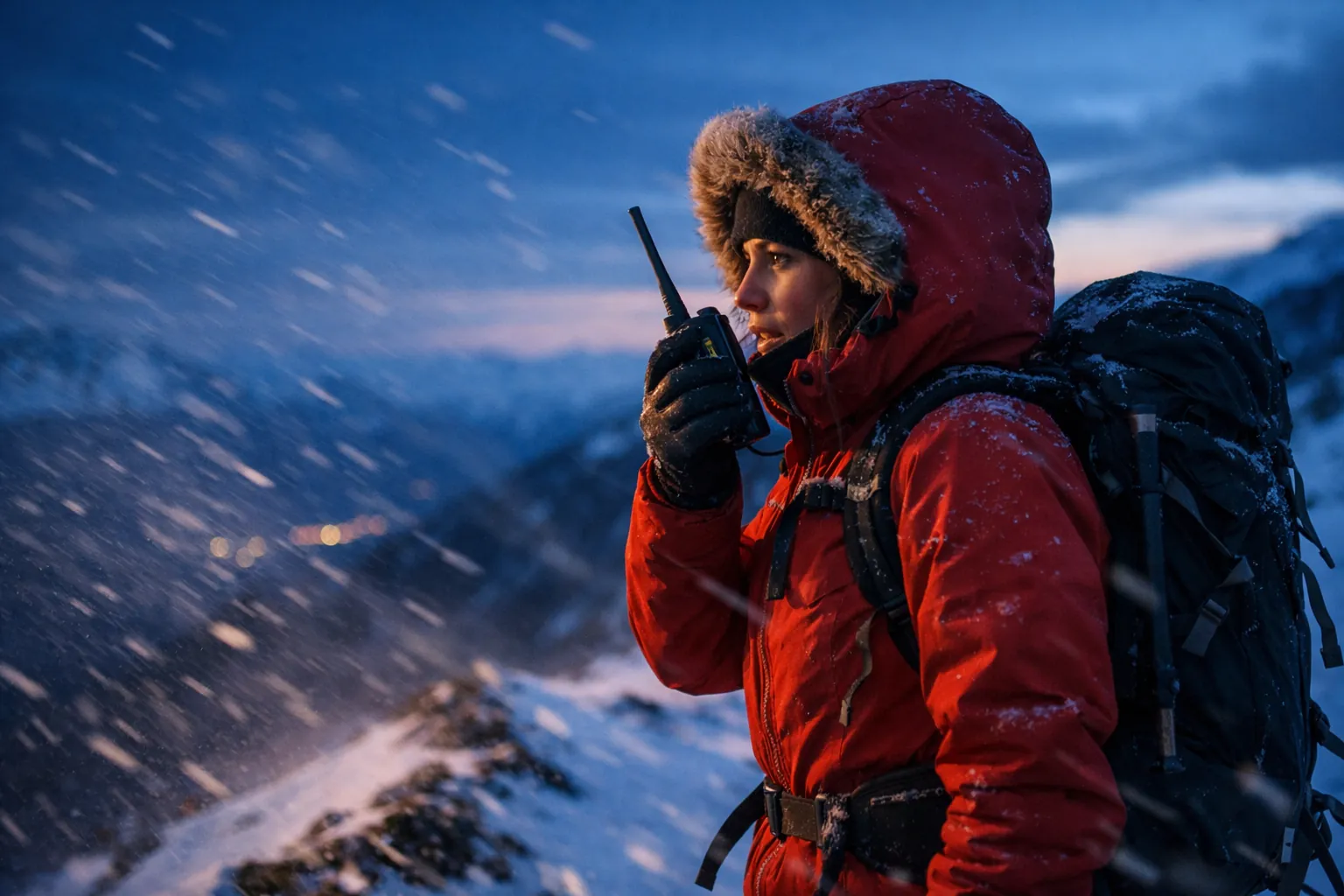
There is no FCC emergency channel on GMRS. The rule is broader than that: 47 CFR 95.1731(a) says any GMRS channel may be used for emergency communications, and every operator must give emergency traffic priority on every channel. Channel 20 with a 141.3 Hz tone is a traveler convention some groups promote. Useful to know. Not law, and not something anyone is obliged to monitor.
Rule vs convention, side by side
Most of the confusion online comes from mixing these two columns together.
| Claim you'll see | Status | Source |
|---|---|---|
| Any channel can carry emergency traffic, and it has priority | FCC rule | 95.1731(a) |
| A one-way call for help is allowed | FCC rule | 95.1731(b)(1) |
| Anyone may use your station to send an emergency message | FCC rule | 95.1705(c)(3) |
| "Mayday" only from a ship, aircraft or vehicle in immediate danger | FCC rule | 95.1733(a)(7) |
| Channel 20 with 141.3 Hz is the "national calling" or traveler channel | Convention, not an FCC rule | Listed on various websites, as the Wikipedia GMRS article notes |
| Channel 19, no tone, as a road chatter channel | Convention, not an FCC rule | A 2026 Midland campaign |
| Channel 1 as an SOS channel | Suggestion, not an FCC rule | Default channel on most radios, so it has the most listeners |
CB radio is where the "emergency channel" idea comes from. CB really does have one: 47 CFR 95.931(a)(2) reserves CB channel 9 for emergencies and traveler assistance. GMRS has no equivalent paragraph.
Exactly what to say in an emergency
If a phone works, call 911 first. A radio reaches whoever happens to be listening, and nobody is required to monitor GMRS.
Emergency call script
- "Emergency, emergency, emergency."
- "This is [your name], [call sign if you have one]."
- Where you are: trail name, mile marker, road, landmark, or GPS coordinates read slowly.
- What happened, in one sentence. "Hiker with a broken leg." "Truck rolled, two people, both awake."
- What you need. "Please call 911 and send them to this location."
- "Over." Then listen for a full minute before repeating.
Keep each call short, then pause and listen. Transmitting nonstop is normally prohibited, but 95.1733(a)(10) carves out communications involving the immediate safety of life or property. Short calls still work better, because you can't hear an answer while you're holding the button.
The word "Mayday" is restricted. 95.1733(a)(7) bars international distress signals except from a ship, aircraft or other vehicle in immediate danger. A stuck vehicle in a flash flood qualifies. A twisted ankle at camp doesn't; say "emergency".
Which channel to actually call on
Since there's no official channel, plan the order ahead of time. This is the sequence we'd put on a family card:
- Your group's own channel and tone. The people most likely to help are the ones expecting to hear from you.
- A local repeater, if you're in range and know its tone. A repeater on a tower or hill hears far more than any handheld. See how to find and use GMRS repeaters.
- Channel 20 (462.675 MHz) with 141.3 Hz. Then the same channel with the tone off.
- Channel 1 (462.5625 MHz) with no tone, since it's the default on most new radios.
- Scan everything with tones off and call on any channel you hear activity on.
Tones off matters. A CTCSS or DCS tone is a squelch filter (95.1777): with one set, your radio stays silent for anyone not sending the same tone. In an emergency you want to hear everybody. Our CTCSS and DCS tone chart explains how tones work and why "privacy code 22" means 141.3 Hz on many radios.
One catch with channel 20: its frequency is also the output of the channel 20 repeater pair (input 467.675 MHz, from 95.1763). In areas with a busy local repeater on that pair, simplex calls on channel 20 can be drowned out. Know your local repeaters before you need them.
All the frequencies are on our GMRS channels and frequencies page and on the printable frequency chart, which has a box for your own emergency order.
Power and range when it counts
If you have a choice of radio, use the one with the most legal power and the best antenna. A mobile on channels 15 to 22 can run up to 50 watts output (95.1767(a)). A handheld on channels 8 to 14 is limited to 0.5 watt ERP (95.1767(c)), which makes those the worst channels for a call for help.
Height still beats watts. Standing on a ridge with a 5-watt handheld will usually beat sitting in a ravine with a 50-watt mobile. Our GMRS range calculator shows how much an antenna height change moves the line-of-sight limit.
Licenses in an emergency
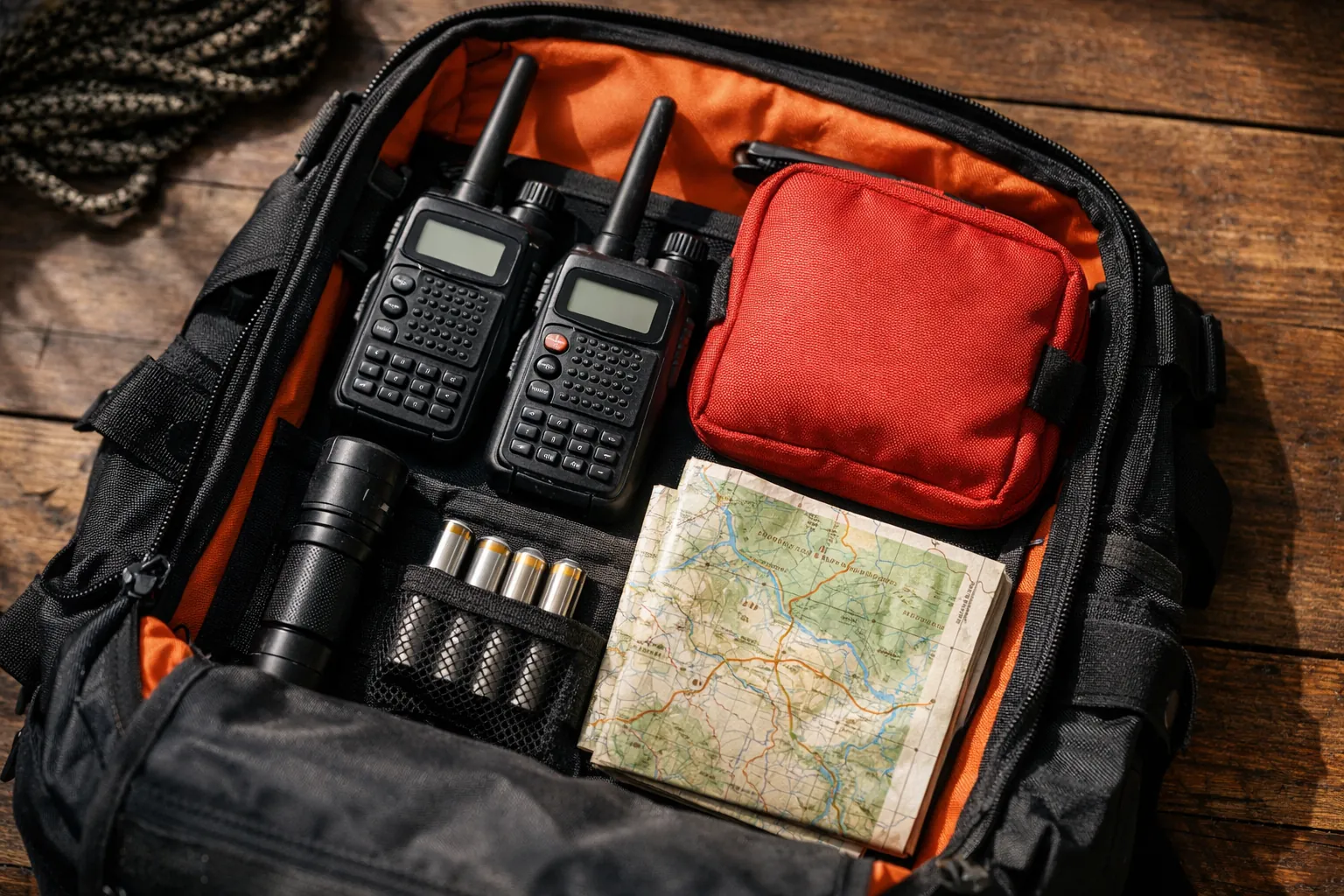
Normally a GMRS license is required to transmit (95.1705). Two provisions matter here. A licensee may let anyone operate their station to send an emergency message (95.1705(c)(3)). And GMRS stations may not send messages to amateur stations except emergency messages (95.1733(a)(9)), so in a real emergency, contact with a ham operator is allowed.
Don't treat any of that as a reason to skip the license. A licensed family that practices with its radios is far more likely to make a working call when it matters. The license costs $35 (47 CFR 1.1102), and the FCC fee page lists no separate regulatory fee. It covers your immediate family.
Make a plan before you need it
The emergency channel that works is the one your family agreed on, wrote down and tested. Our free family emergency radio plan is a one-page sheet with primary, backup and repeater channels, check-in times and meeting places. For the radios themselves, see the best GMRS radios for preppers.
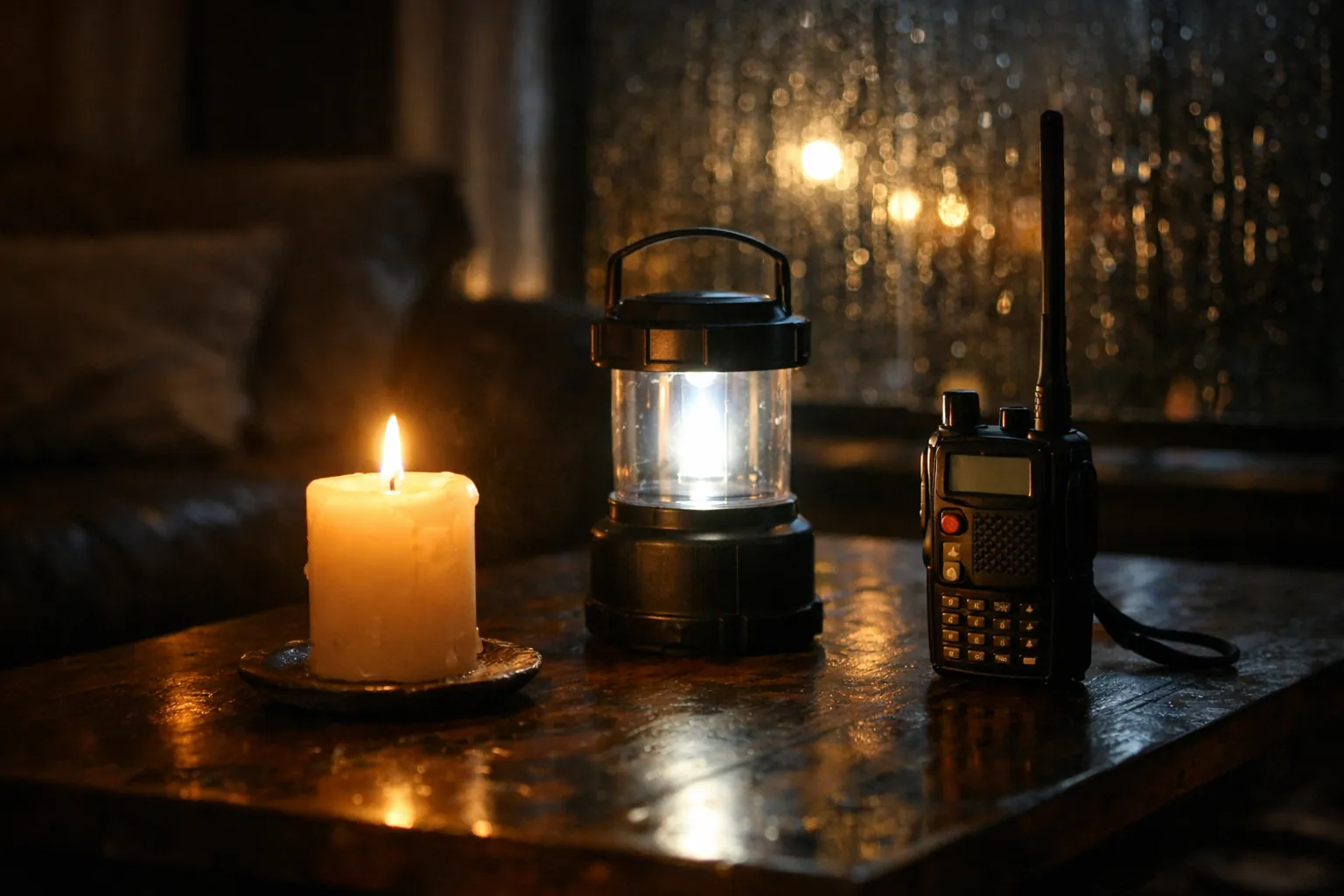
A practice drill once a season takes ten minutes. Pick a time, have everyone call in from wherever they are, and note who couldn't be heard. That's the gap to fix with a better antenna or a repeater.
Sources: 47 CFR 95.1731, 95.1733, 95.1705, 95.1763, 95.1767, 95.1777, 95.931 (eCFR, up to date as of October 1, 2026); Midland GXT1000 owner's manual and Rocky Talkie Expedition user manual (privacy code tables); Wikipedia GMRS article and Midland's Channel 19 page (conventions). Rules checked: October 3, 2026. How we research · Affiliate disclosure