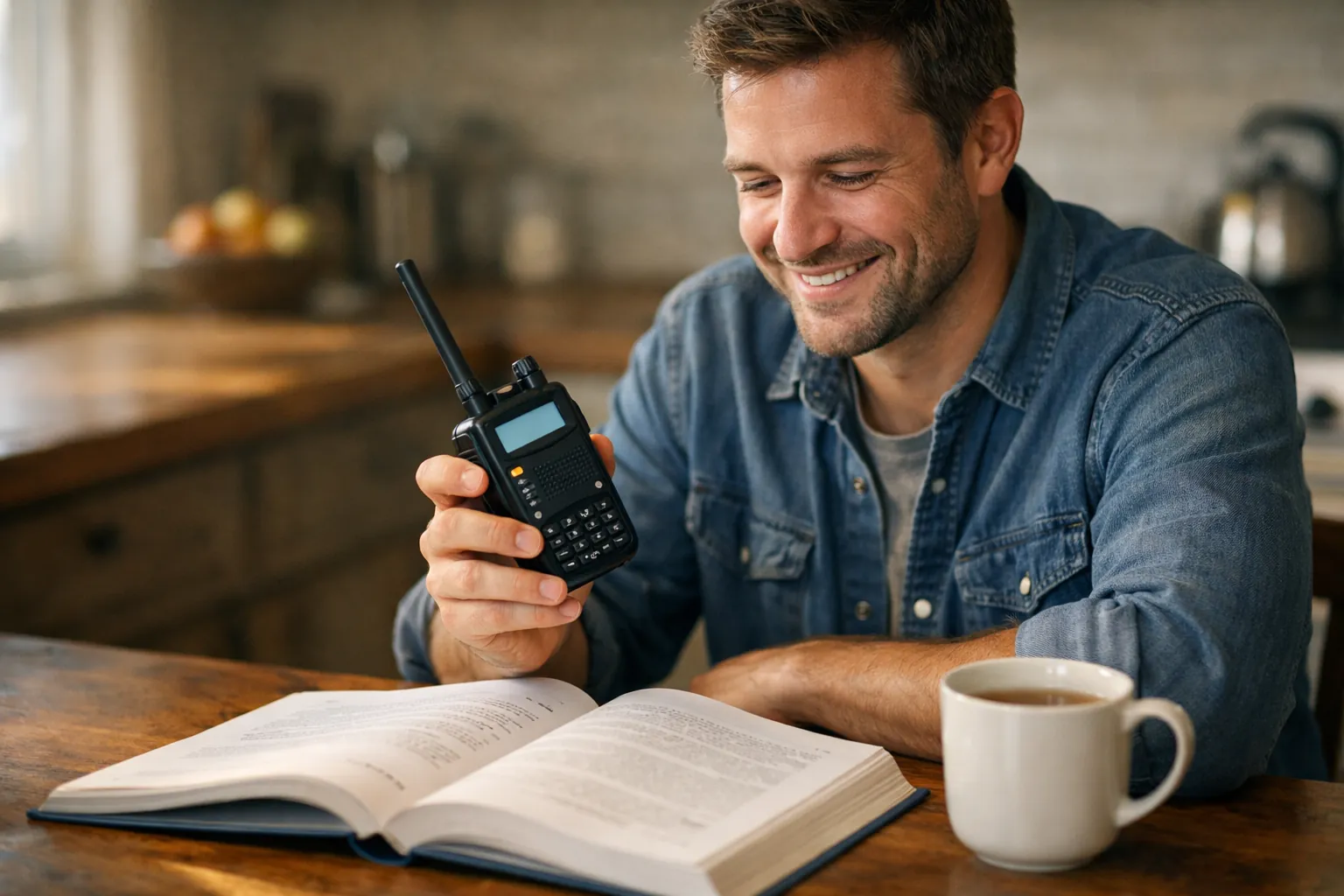
To start in ham radio, pass the Technician exam (35 multiple-choice questions, 26 to pass, no Morse code), pay the FCC's $35 fee, and buy a dual-band handheld. With that you can talk through local repeaters, join emergency nets and make contacts across your region. The whole path takes a few weeks of evening study and costs well under $150 to get on the air.
How we put this together
Licensing facts come from the amateur radio rules, 47 CFR Part 97, and the fee table in 47 CFR 1.1102, read on October 3, 2026. Radio suggestions come from current Amazon listings and sales data the same day. How we research.
What ham radio is (and how it differs from GMRS)
Amateur radio is a licensed hobby service with access to dozens of frequency bands, from long-distance HF to local VHF/UHF and satellites. Compared with GMRS:
| GMRS | Ham (Technician) | |
|---|---|---|
| Exam | None | 35 questions (97.503) |
| Covers family? | Yes, immediate family | No, each operator needs a license |
| Frequencies | 30 fixed channels near 462-467 MHz | All amateur bands from 50 MHz up, plus HF slices (97.301) |
| Max power | 50 W (mobile/base) | 1,500 W PEP (97.313) |
| Radios | Must be GMRS-certified | Any amateur radio, even home-built |
| License | Both: $35 FCC fee, 10-year term | |
Full comparison in GMRS vs FRS vs CB vs ham.
Your roadmap, step by step
1. Listen first
You don't need a license to listen. Look up your local repeaters, put them in a radio or scanner and listen to how people make contacts, check into nets and identify. It's the fastest way to make the exam material click.
2. Study the Technician question pool
Every exam question comes from a published pool, so studying is predictable. A guide like the ARRL Ham Radio License Manual explains the "why," and practice tests drill the questions. Focus on rules, safety, basic electronics and operating practices.
3. Take the exam
Exams are run by teams of at least three accredited volunteer examiners at sessions coordinated by a VEC (97.509). Local clubs host most sessions. You'll need an FCC Registration Number (FRN) from CORES; if you already have a GMRS license, you have one.
4. Get your call sign
After you pass, pay the FCC's $35 application fee. Your license and call sign appear in the FCC's ULS once granted, and the license lasts 10 years (97.25).
5. Buy a first radio
A dual-band (2 m and 70 cm) handheld is the right first radio for nearly everyone. Three tiers, from current Amazon listings:
- Cheapest way on the air: the classic Baofeng UV-5R, one of the best-selling ham handhelds on Amazon with 10,000+ ratings. Fine for learning; menus are clunky.
- Budget with a better kit: the BTECH BF-F8HP, listed as an 8-watt dual-band radio covering 136-174 and 400-520 MHz.
- Buy once: the Yaesu FT-65R, a 5-watt 144/440 MHz handheld with a three-year warranty per its listing.
Our best handheld ham radio for beginners guide compares them in detail, and Baofeng UV-5R vs Quansheng UV-K5 covers the cheapest options.
6. Make your first contact
Program a local repeater (frequency, offset and tone), listen for a minute, then key up and say your call sign followed by "listening." Someone will usually answer. Identify at the end of the contact and at least every 10 minutes (97.119).
What beginners actually do on the air
| Activity | License needed | Gear |
|---|---|---|
| Chat on local repeaters | Technician | Handheld or mobile |
| Weekly club and emergency nets | Technician | Handheld or mobile |
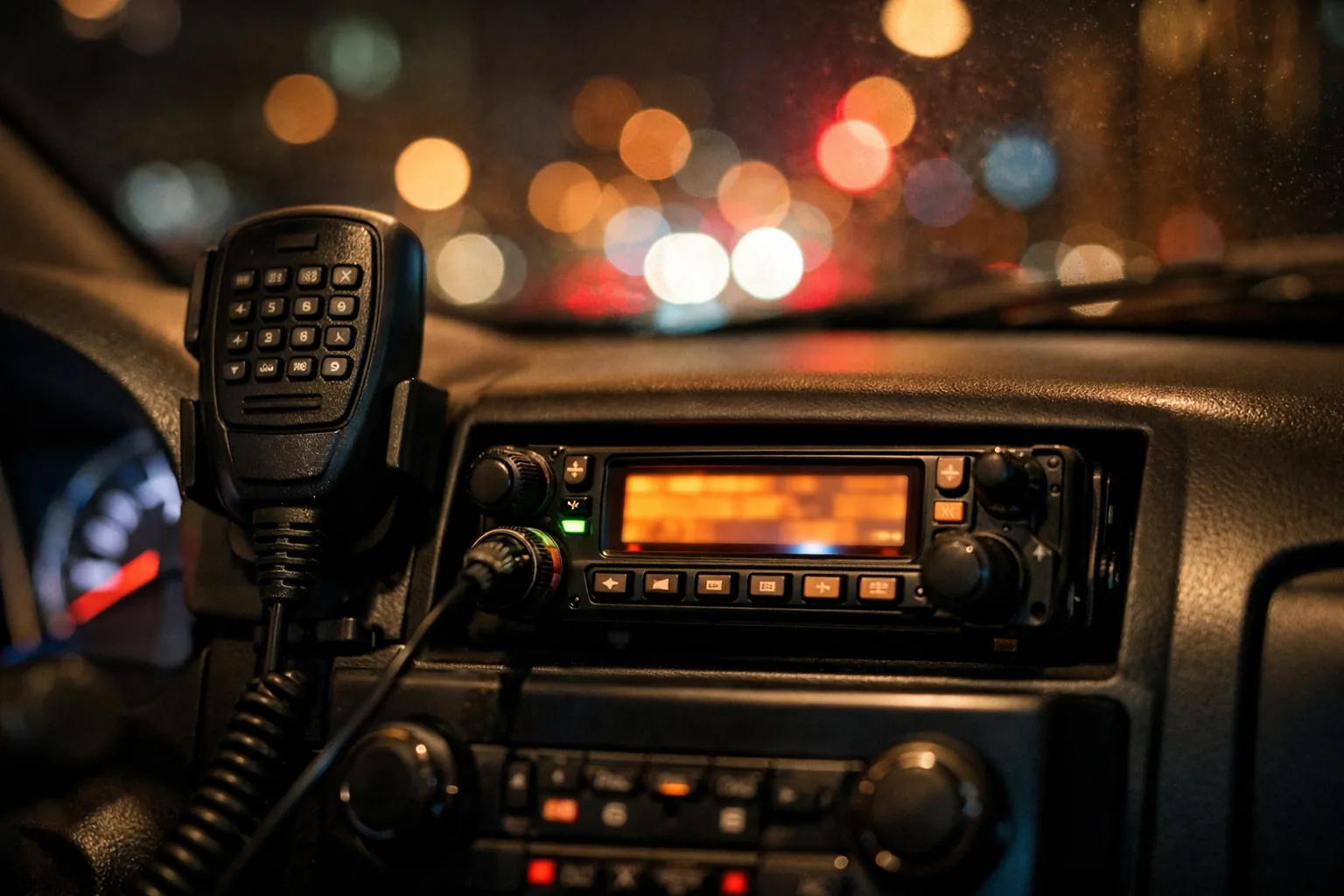
| Talk from the car on commutes | Technician | A 2 m/70 cm mobile; see best mobile ham radio |
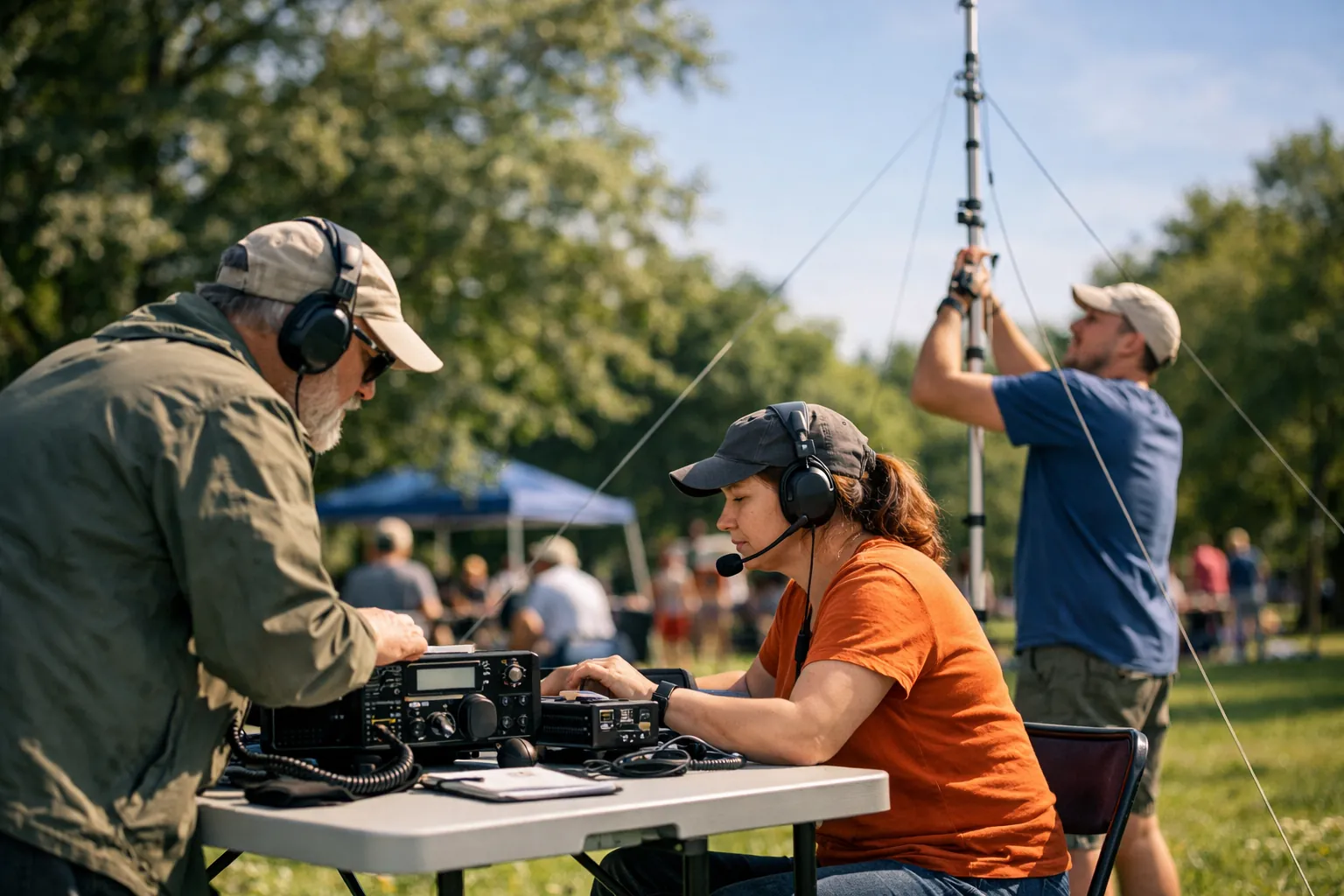
| Field Day and public service events | Technician | Whatever the club brings |
| Worldwide contacts on HF | General (Technician has limited HF) | HF transceiver and antenna |
Three accessories worth buying early
- A programming cable. Entering repeaters by keypad is tedious. A cable like the BTECH PC03 FTDI cable plus free CHIRP software makes it a five-minute job. Check that the cable matches your radio's connector.
- A better antenna. The stock "rubber duck" on budget handhelds is the weakest link. A longer dual-band whip helps more than extra watts.
- A spare battery. Nets run long, and handheld batteries don't.
Beginner mistakes to avoid
- Transmitting before your call sign is issued. Listen all you like, but don't transmit until your license shows in ULS.
- Using a ham radio on GMRS or FRS. Not legal: those services require radios certified for them, and the FCC won't certify a GMRS radio that can transmit on ham bands (95.1761). Keep family GMRS radios separate.
- Buying an HF rig first. As a Technician, HF access is limited. Start with VHF/UHF, then upgrade to General.
The bottom line
Ham radio is easier to get into than its reputation suggests: a few weeks of study, a 35-question exam with no Morse code, a $35 FCC fee and a dual-band handheld. Start by listening, get your Technician license, program your local repeaters and say hello. When you want the world, the General license is the next step; see ham radio license levels.
Rules checked against 47 CFR Part 97 and 1.1102 (eCFR, current through October 1, 2026) on October 3, 2026. Radio details from Amazon listings checked the same day. 47 CFR Part 97 · How we research · Affiliate disclosure