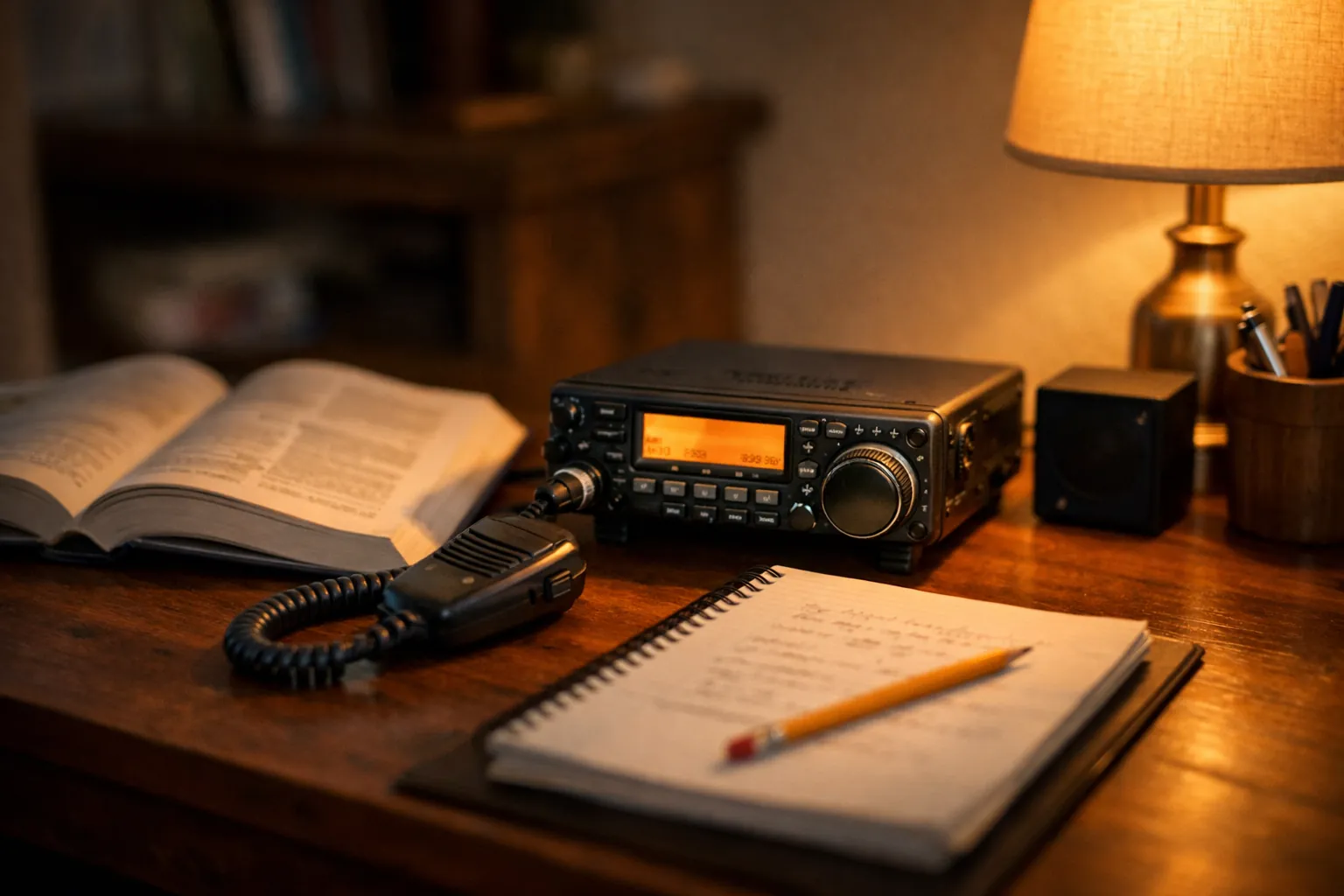
There are three ham radio license levels you can earn today: Technician, General and Amateur Extra. Each adds one written exam and more frequencies. Technician (35 questions, 26 to pass) gives you every amateur band above 50 MHz, which is what handhelds and local repeaters use. General adds most of the long-distance HF bands. Extra adds the rest. There's no Morse code test, the FCC fee is $35, and a license lasts 10 years.
Where these facts come from
Every number below comes from the amateur radio rules, 47 CFR Part 97, read in the eCFR on October 3, 2026: license classes (97.9), exam elements (97.501), question counts (97.503), frequency privileges (97.301), power (97.313) and term (97.25). The fee is in 47 CFR 1.1102. How we research.
The three levels side by side
| Technician | General | Amateur Extra | |
|---|---|---|---|
| Exams required | Element 2 | Elements 2 + 3 | Elements 2 + 3 + 4 |
| Questions (pass mark) | 35 (26) | +35 (26) | +50 (37) |
| VHF/UHF (50 MHz and up) | All amateur bands | All | All |
| HF (long distance) | Slices of 80, 40, 15 and 10 m | Most of every HF band | All amateur HF |
| Max power | 1.5 kW PEP; 200 W PEP on its HF slices | 1.5 kW PEP (200 W on 30 m) | 1.5 kW PEP (200 W on 30 m) |
| Typical first radio | Dual-band handheld or mobile | HF transceiver | Same as General |
| License term / FCC fee | 10 years / $35 for a new license | ||
Technician: the entry license
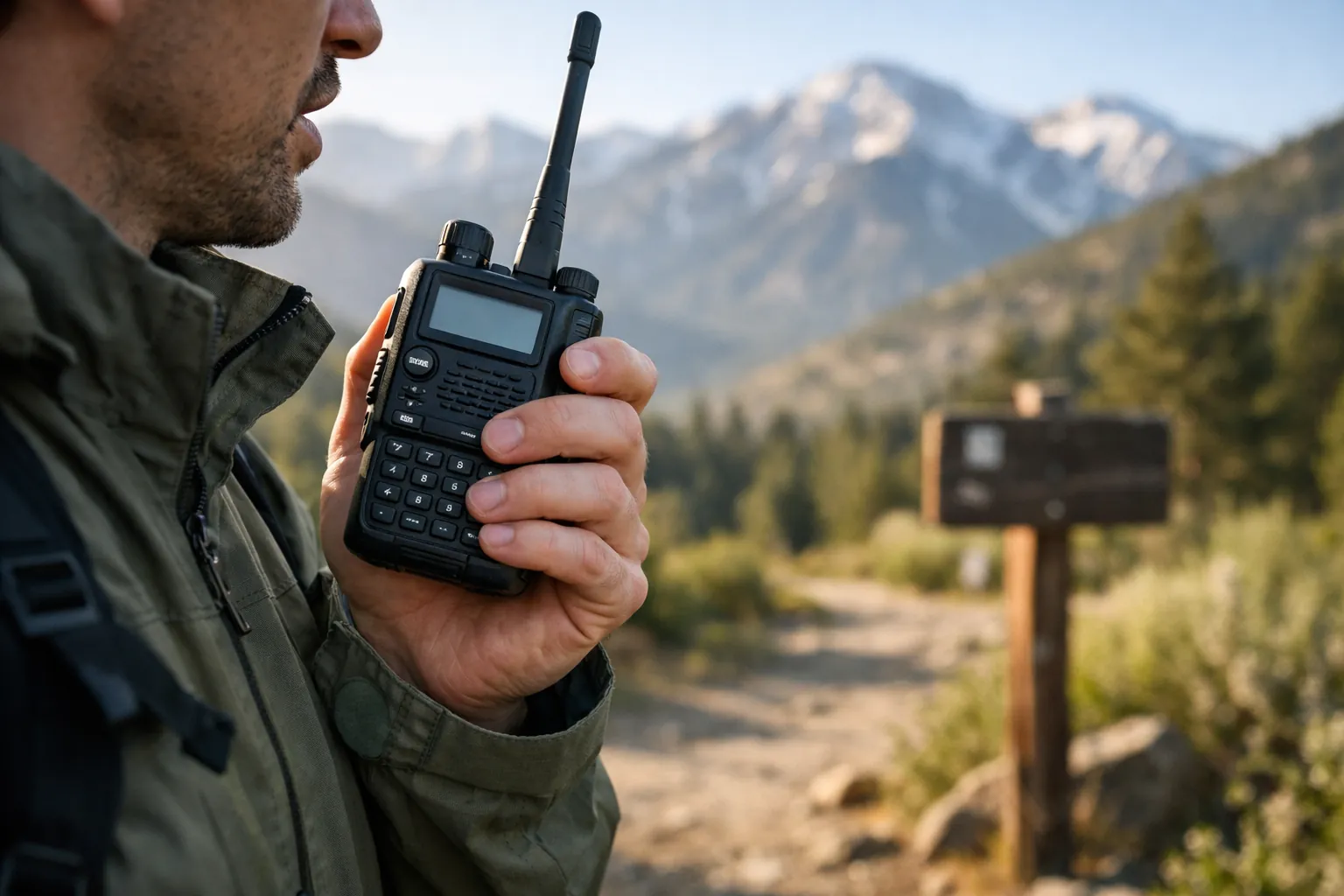
The Technician license is where nearly everyone starts. Under 97.301(a), a Technician has full privileges on every amateur band from 6 meters (50 MHz) up, including the 2 m (144-148 MHz) and 70 cm (420-450 MHz) bands that handheld and mobile radios and most local repeaters use. On HF, a Technician gets small slices of 80, 40 and 15 meters and 28.0-28.5 MHz on 10 meters, with a 200 W PEP limit there (97.313(c)). Voice is authorized from 28.3 to 28.5 MHz.
In practice: Technician is all you need for local talk, repeaters, emergency nets, satellites and digital voice. If you came from GMRS, it's the natural next step. See ham radio for beginners for what to do once you pass.
General: the HF upgrade
General adds Element 3 and opens most of the HF bands, which bounce off the ionosphere for regional and worldwide contacts. Under 97.301(d), Generals get privileges on 160, 80/75, 60, 40, 30, 20, 17, 15, 12 and 10 meters, with some band edges reserved for Extras. This is the license for people who want to talk across the country from a home station.
Amateur Extra: everything
Extra requires the 50-question Element 4 and grants every amateur privilege, including the bottom segments of 80, 40, 20 and 15 meters that Generals can't use. It's also the class required to serve as a volunteer examiner for Amateur Extra exams (97.509). Most people take it for the challenge or to give back by running exams.
How to get licensed

- Study the question pool. Every question comes from a public pool, so a good study guide plus practice tests works. The ARRL Ham Radio License Manual is a common choice for Technician.
- Get an FRN. Register for an FCC Registration Number in CORES. If you already have one from a GMRS license, use it.
- Find an exam session. Exams are given by a team of at least three volunteer examiners at a session coordinated by a Volunteer Examiner Coordinator (97.509). Local radio clubs host most sessions; ask a nearby club for the schedule.
- Pass and pay. After you pass, pay the FCC's $35 application fee. Your call sign appears in the FCC's ULS once the license is granted.
- Get on the air. Identify with your call sign at the end of each contact and at least every 10 minutes (97.119).
What to buy at each level
| Level | Good first purchase | Our guide |
|---|---|---|
| Studying | A study guide like the ARRL License Manual | Ham radio for beginners |
| Technician | A dual-band handheld such as the Yaesu FT-65R or BTECH BF-F8HP | Best handheld ham radio for beginners |
| Technician, in a vehicle | A 2 m/70 cm mobile | Best mobile ham radio |
| General and up | An HF transceiver and wire antenna | Coming soon |
A ham license does not make a ham radio legal on GMRS. FCC rules refuse GMRS certification to radios that can transmit on amateur bands (95.1761), so keep your family's GMRS radios and your ham radios separate. Our GMRS vs FRS vs CB vs ham guide explains the differences.
The bottom line
Start with Technician: 35 questions, no Morse code, and it unlocks every VHF/UHF band your first radio will use. Move to General when you want HF and worldwide contacts, and Extra when you want everything. Each license runs 10 years and costs $35 in FCC fees.
Rules checked against 47 CFR Part 97 and 47 CFR 1.1102 (eCFR, current through October 1, 2026) on October 3, 2026. Sources: 47 CFR Part 97 · 47 CFR 1.1102. How we research · Affiliate disclosure