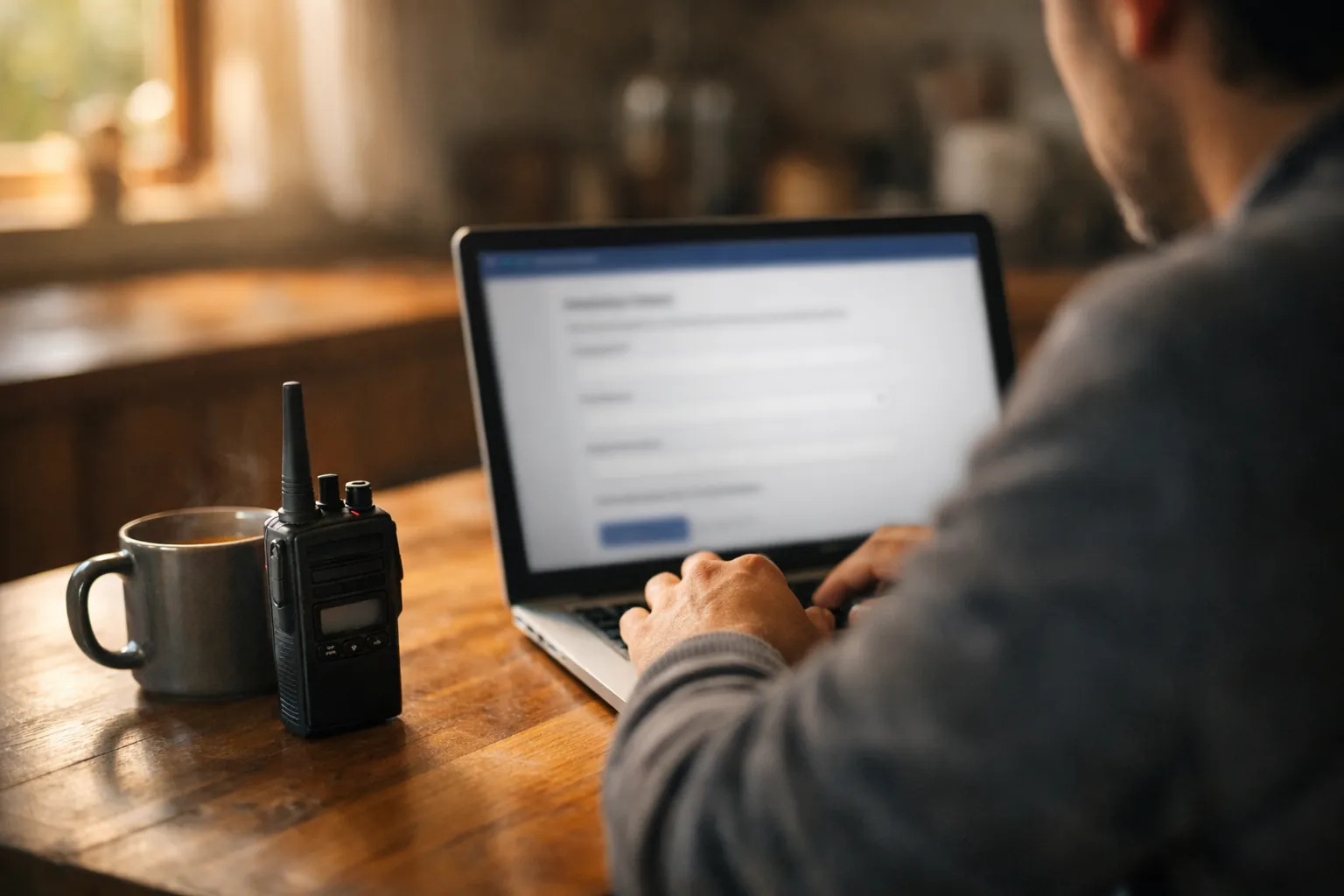
To get a GMRS license, register for a free FCC Registration Number (FRN), then apply for a new license in the FCC's Universal Licensing System under radio service code ZA and pay the $35 fee. There is no exam. You must be 18 or older, the license lasts 10 years, and your immediate family can use your radios under it. The form itself is short; most of the work is setting up your FCC account first.
How we checked these facts
GMRS rules change rarely, but when they do, guides on radio-seller blogs lag behind for years. So every number on this page comes from the regulation itself or the FCC's own pages, checked on October 3, 2026:
- Eligibility, family use and the 10-year term: 47 CFR 95.1705.
- The $35 fee: the personal-license fee table in 47 CFR 1.1102 and the FCC's personal service application fees page.
- The filing process: the FCC's GMRS page and its ULS guide to applying for a new license.
We are not lawyers and this is not legal advice, but we link every rule so you can read it yourself. If something here ever disagrees with the FCC, the FCC wins. How we research.
The GMRS license at a glance
| Question | Answer | Source |
|---|---|---|
| Cost | $35 application fee (new or renewal) | 47 CFR 1.1102 |
| Exam | None | FCC GMRS page |
| Minimum age | 18 for a new license | 95.1705(a) |
| License term | Normally 10 years from grant or renewal | 95.1705(e) |
| Who else may operate | Your immediate family (any age), plus anyone in an emergency | 95.1705(c) |
| Radios you can use | Only transmitters FCC-certified for GMRS | 95.1761, 95.335 |
| Identifying on air | Say your call sign at the end of a transmission or series, and at least every 15 minutes during long conversations | 95.1751 |
How to apply, step by step
Step 1: Get an FCC Registration Number (FRN)
The FRN is a 10-digit number the FCC uses to identify everyone who does business with it. Create an FCC username, then register an FRN for yourself as an individual in CORES, the Commission Registration System. It's free. If you already have an FRN (from a ham license, for example), use that one. The FCC's CORES page explains the account types.
Step 2: Log in to the Universal Licensing System
Go to the ULS online filing login and sign in with your FRN and password (or your FCC username). On the left side of the screen, choose Apply for a New License. The FCC's ULS guide walks through the screens if they look different when you visit.
Step 3: Choose radio service code ZA
From the drop-down list of radio services, pick ZA – General Mobile Radio (GMRS). Answer the eligibility and basic qualification questions honestly (you must be an individual, at least 18, and not a representative of a foreign government). Check your legal name, mailing address and email address carefully: the FCC emails the official license copy to that address once it's granted.
Step 4: Sign, submit and pay $35
Type your name to sign the application electronically and click Submit Application. You'll then be sent to pay the $35 fee online through the FCC's payment system in CORES. The application isn't processed until the fee is paid, so don't close the window after you submit.
Step 5: Wait for the grant, then find your call sign
According to the FCC, a filed application normally appears in the ULS application search the next business day. Once it's granted, you'll get an email, and your call sign (GMRS call signs are four letters and three numbers, such as the WR and WQ series in the FCC database) will show in the FCC's GMRS License Search. Write it on a piece of tape on each radio. Only then should you start transmitting on GMRS.
Who your license covers (and who it doesn't)
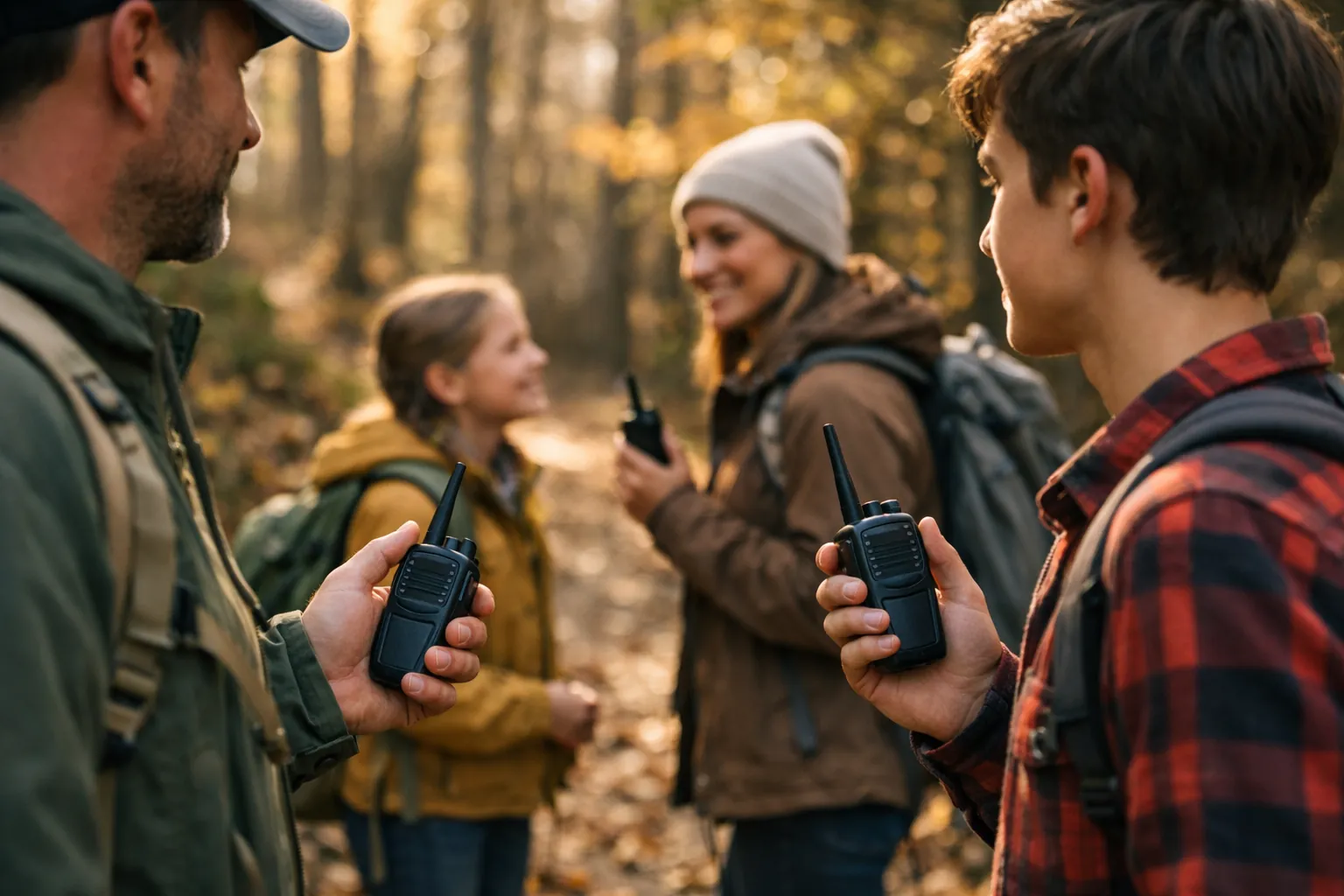
This is the part most guides get vague about. The FCC rule (95.1705(c)(2)) lets a GMRS licensee allow immediate family members to operate their stations, and it defines that term precisely: spouse, children, grandchildren, stepchildren, parents, grandparents, stepparents, brothers, sisters, aunts, uncles, nieces, nephews and in-laws. Age doesn't matter. A 9-year-old on your license can use your radios, and under 95.1743 the licensee, not the child, is responsible for how they're used.
What's not covered: friends, neighbors and the other families in your Jeep club. They each need their own $35 license to transmit on GMRS. The exception is a genuine emergency: anyone may use your GMRS station to send an emergency message.
| Person | Can use your GMRS radios? |
|---|---|
| Your spouse, kids, grandkids, stepkids | Yes |
| Your parents, grandparents, siblings | Yes |
| Aunts, uncles, nieces, nephews, in-laws | Yes |
| Your friend in the next truck | No: they need their own license |
| Anyone, to call for help in an emergency | Yes |
After you're licensed: the three rules that matter most
1. Identify with your call sign
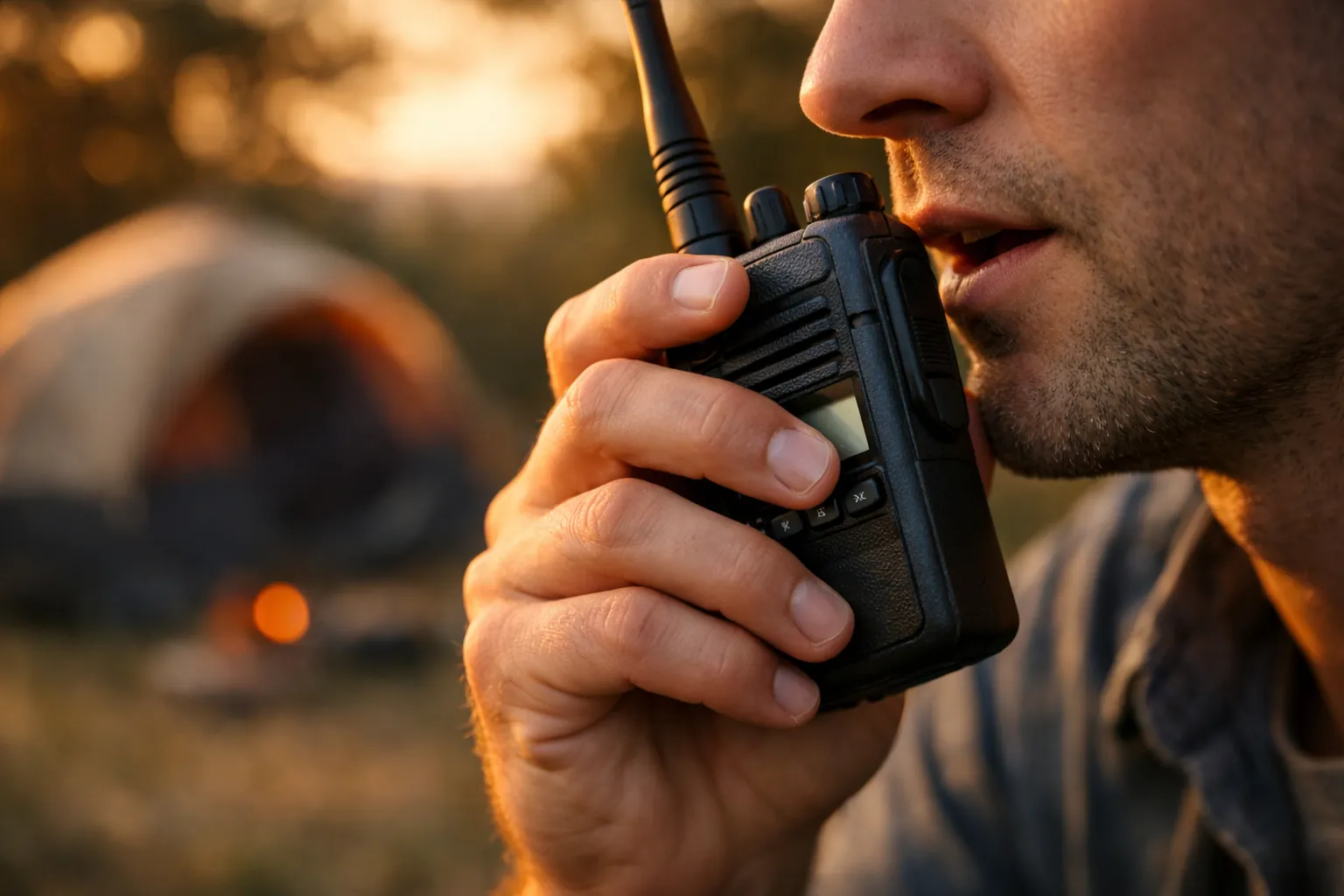
Under 95.1751, you transmit your call sign at the end of a transmission or a series of transmissions, and at least once every 15 minutes during a conversation that runs longer. You can add a unit number, like "WRXX123 unit 2," so the family can tell who's talking.
2. Use only GMRS-certified radios
The license covers you; it doesn't cover the hardware. Every GMRS transmitter must be FCC-certified for GMRS (95.1761), and the rule specifically refuses certification to any radio that can also transmit on amateur (ham) bands. That's why a regular Baofeng UV-5R is not a legal GMRS radio, licensed or not. Look for "GMRS" in the model name and an FCC ID you can look up. Our guide to the best GMRS radios for beginners sticks to certified models such as the Midland GXT1000VP4.
3. Keep it to talking
No music, no ads, no continuous transmissions, and no chatting with ham stations except in an emergency (95.1733). Plain-language talk about personal or business activities is exactly what GMRS is for.
What to buy once you have a call sign
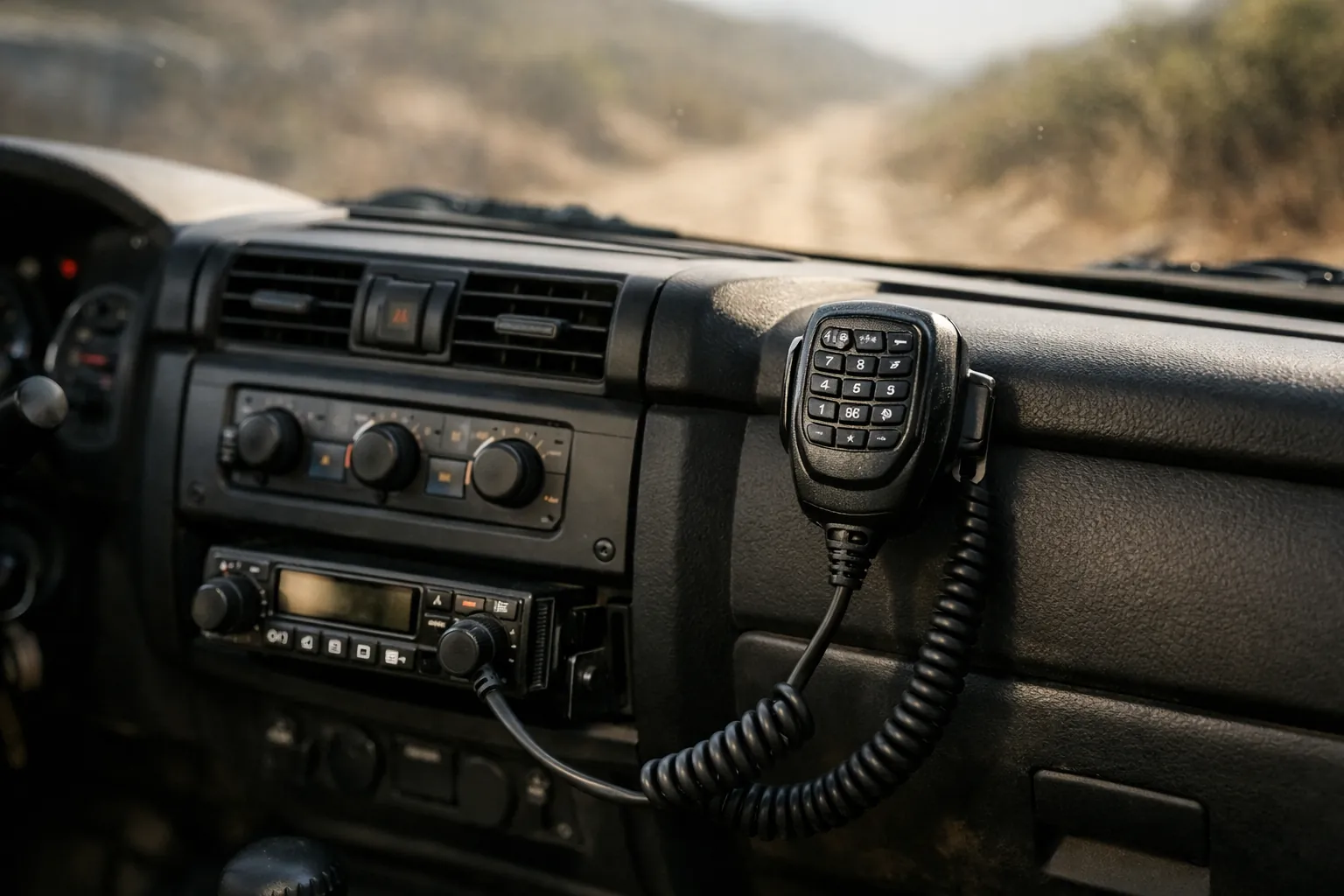
The license matters most if you want more than walkie-talkie range. A licensed GMRS operator can run mobile and base radios up to 50 watts on the main channels and use repeaters (95.1767), which is a different league from a 2-watt FRS radio. Where to go next:
- A family handheld set: start with our beginner picks.
- A radio for the truck or Jeep: see the best GMRS radios for Jeeps, such as the Midland MXT275.
- Not sure you need a license at all? Read GMRS vs FRS and is GMRS worth it?
- Want a channel chart? Our GMRS channels and frequencies page lists all 30 channels with power limits.
The bottom line
Getting a GMRS license is easier than renewing a driver's license: register an FRN in CORES, apply under code ZA in ULS, pay $35, and wait for your call sign. No exam, 10 years of coverage, and the whole immediate family can use it. The two things people get wrong afterward are skipping the call sign and buying a radio that isn't certified for GMRS. Avoid both and you're set.
Rules checked against the Electronic Code of Federal Regulations (Title 47, current through October 1, 2026) and FCC.gov on October 3, 2026. Sources: FCC GMRS · 47 CFR Part 95 Subpart E · 47 CFR 1.1102. How we research · Affiliate disclosure