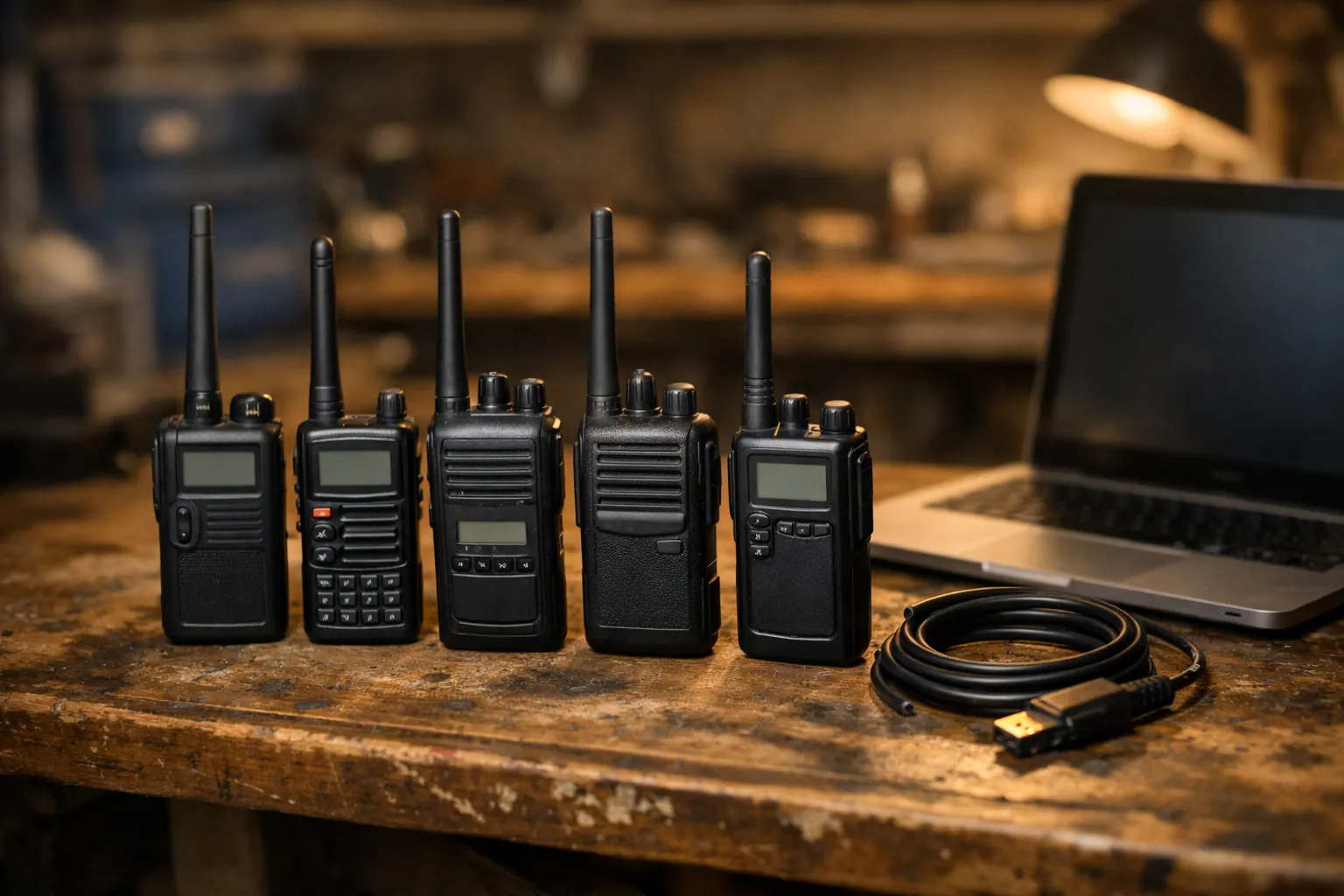
No, not with a UV-5R, BF-F8HP or any other Baofeng ham radio. GMRS allows only transmitters certified for GMRS (47 CFR 95.1761), and the FCC won't certify a radio for GMRS if it can also transmit on the amateur bands. Baofeng does sell GMRS-only models, like the UV-5G Plus and UV-9G, and those are legal with a GMRS license. The way to tell them apart is the FCC ID on the label.
What the rule actually says
Two sections settle it. 95.335 says no one may operate a transmitter in any Personal Radio Service, GMRS included, unless it's certified for that service, and that using an uncertified one "voids the user's authority to operate that station." 95.1761(c) then says what a GMRS radio can't be:
- A radio that can transmit on frequencies outside the GMRS list in 95.1763, unless it's also certified for the service those frequencies belong to.
- A radio that can operate in services that don't require certification, "such as the Amateur Radio Service."
Put those together and a dual-band 144/440 MHz ham handheld can't be a GMRS radio. Not because it's Chinese, cheap or a Baofeng, but because it does too much. A GMRS license doesn't change that: it authorizes you to run GMRS stations, and the station still has to be certified equipment.
Can you listen? Yes. Receiving GMRS on any radio is fine, which is why many people program GMRS channels into a UV-5R as receive-only memories.
Legal on GMRS, ham only, or FRS only: the best sellers
We looked up the FCC grant for each of these on October 3, 2026. "95E" is the rule part for GMRS. Ham-only radios usually have no transmit grant at all (amateur transmitters don't need one), just a Part 15 receiver approval, or a Part 90 land-mobile grant.
| Radio | FCC ID checked | What the grant covers | On GMRS? |
|---|---|---|---|
| Baofeng UV-5R | ZP5BF-5R, 2AJGMUV-5R | Part 90 (136-174, 400-480 MHz), Part 15B receiver; no 95E | No: listen only |
| BTECH / Baofeng BF-F8HP | 2AGND-F8HP | Part 15B receiver only; no 95E | No: ham radio |
| BTECH UV-50X2 (mobile) | 2AGND50XX | Part 15B only; no 95E | No: ham radio |
| BTECH UV-PRO | 2AGND-UV-PRO | Part 90 (150-174, 421-512 MHz), Part 15; no 95E | No: ham and licensed land mobile |
| Baofeng UV-K5 | 2AJGM-UVK5 | Part 15B receiver only; no 95E | No: ham radio |
| Baofeng UV-5G Plus | 2AJGM-5GPLUS | Part 95E, 462-467 MHz | Yes, with a GMRS license |
| Baofeng UV-5G | 2AJGM-UV5G | Part 95E, 462-467 MHz | Yes, with a GMRS license |
| Baofeng UV-9G | 2AJGM-P52UV (from the listing) | Part 95E, 462-467 MHz | Yes, with a GMRS license |
| Baofeng GM-15 Pro | 2AJGM-GM15PRO | Part 95E, 462-467 MHz | Yes, with a GMRS license |
| BTECH GMRS-V2 | 2AGND-GMRS-V2 | Part 95E, 462-467 MHz | Yes, with a GMRS license |
| BTECH GMRS-PRO | 2AGND-GMRS-PRO | Part 95E, 462 MHz; Bluetooth under Part 15C | Yes, with a GMRS license |
Grants read through fccid.io, a mirror of the FCC's equipment authorization database, on October 3, 2026. Look up your own radio's label: a manufacturer can sell different hardware under similar names.
FRS-only radios are the third category. Since September 30, 2019 nobody may sell a hand-held radio certified for both FRS and GMRS (95.1791), so a current handheld is one or the other. FRS radios need no license but have fixed antennas and lower power. Our GMRS vs FRS guide covers that choice.
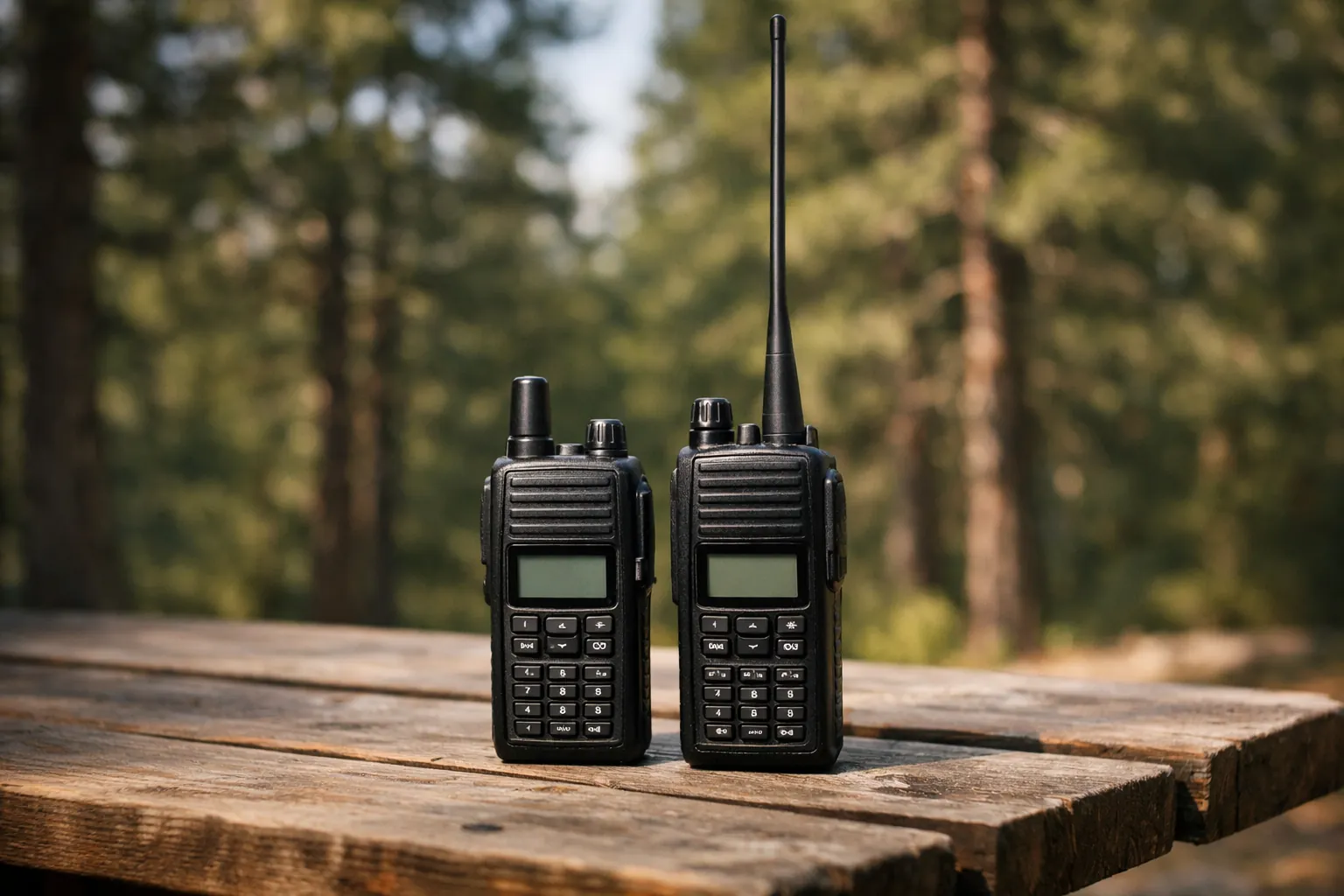
How to check any radio in three steps
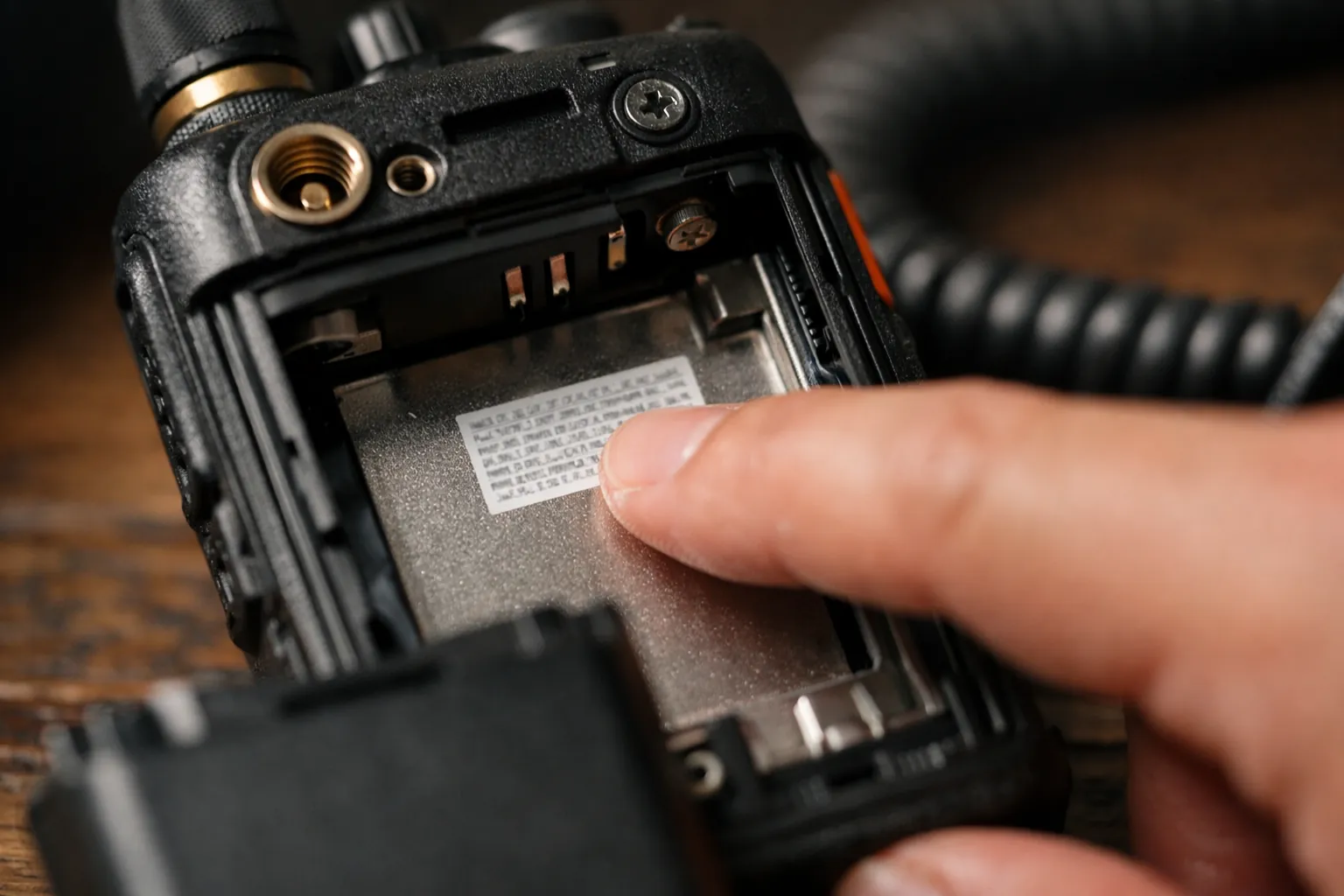
- Find the FCC ID. It's on a label, usually under the battery. Amazon listings sometimes print it too: the UV-9G listing gives 2AJGM-P52UV and says Part 95E.
- Look it up. At the FCC ID search, the grantee code is the first part (3 characters for older IDs, 5 for newer ones, such as 2AJGM) and the product code is the rest.
- Read the rule parts. A GMRS radio's grant lists "95E" next to frequency ranges between 462.55 and 467.725 MHz. If you only see 90, 15B, 22 or no 95 entry at all, it isn't a GMRS radio.
One wrinkle trips people up. A grant can list GMRS and other services together. The Baofeng UV-5G Plus grant shows Part 95E transmit plus Part 15B receive coverage of the VHF and UHF bands, because it can listen to them. Receiving is fine. What matters is that it only transmits where its 95E grant says.
If you want a Baofeng for GMRS
Baofeng's GMRS models are popular for the same reason the UV-5R is: they're cheap and programmable. Three worth a look, all with Part 95E grants:
Baofeng UV-5G Plus (2-pack)
This is the GMRS version most UV-5R shoppers end up with: 500 bought on Amazon in the past month and 1,200+ ratings. It keeps the familiar handheld shape, adds USB-C charging and a bigger battery, and the listing says it's CHIRP compatible for loading repeater pairs from a computer. Baofeng's listing quotes up to 8 W on channels 15 to 30. Treat any range claim with caution and check the range calculator instead.
- FCC ID2AJGM-5GPLUS (Part 95E)
- Channels969 customizable (999 listed)
- Battery2,500 mAh, USB-C
- Display1.9 in color
- ProgrammingCHIRP compatible (listing), frequency copy
- Waterproofno (listing)
Why it stands out
- Part 95E grant under its own FCC ID
- USB-C charging, 2,500 mAh battery
- Programmable with CHIRP for repeaters
Think twice if
- You need a waterproof radio
- You want something simpler than a 999-channel menu
Baofeng UV-9G (2-pack)
The UV-9G is the one to pick if the radio lives outdoors. Baofeng lists IP67 sealing, good for 30 minutes at 1 meter, and puts the FCC ID right in the listing along with "Part 95E" certification, which our lookup confirmed. It ships with the 30 GMRS channels preprogrammed, extra slots for repeater pairs, and a programming cable in the box.
- FCC ID2AJGM-P52UV (Part 95E, per listing)
- WaterproofIP67 (1 m, 30 min)
- Channels30 GMRS preset, 31-54 as repeater slots
- NOAA11 channels
- Programming cableincluded
Why it stands out
- IP67 waterproof
- GMRS channels preprogrammed out of the box
- Programming cable included
Think twice if
- You want USB-C charging (the listing doesn't mention it)
BTECH GMRS-V2
BTECH, the US company that sells the BF-F8HP, also makes GMRS radios, and the GMRS-V2 is its programmable GMRS handheld. The FCC grant shows about 4.6 W ERP on the main channels and the 467 MHz repeater inputs. It has dual watch, dual PTT and CHIRP support, which makes it the easiest of the three to set up for a list of local repeaters.
- FCC ID2AGND-GMRS-V2 (Part 95E)
- Power5 W
- Channels200
- ChargingUSB-C plus desktop charger
- WeatherIP54
- ProgrammingCHIRP
Why it stands out
- Repeater-ready with 200 named channels
- USB-C charging plus a desktop charger
- CHIRP support for bulk programming
Think twice if
- You need full waterproofing (IP54 is splash-resistant)
The Baofeng GM-15 Pro (FCC ID 2AJGM-GM15PRO, Part 95E) is another option in a two-pack. Programming any of these from a computer is covered in our CHIRP GMRS programming guide, and the best GMRS radio roundup compares them with Midland, Wouxun and the rest.
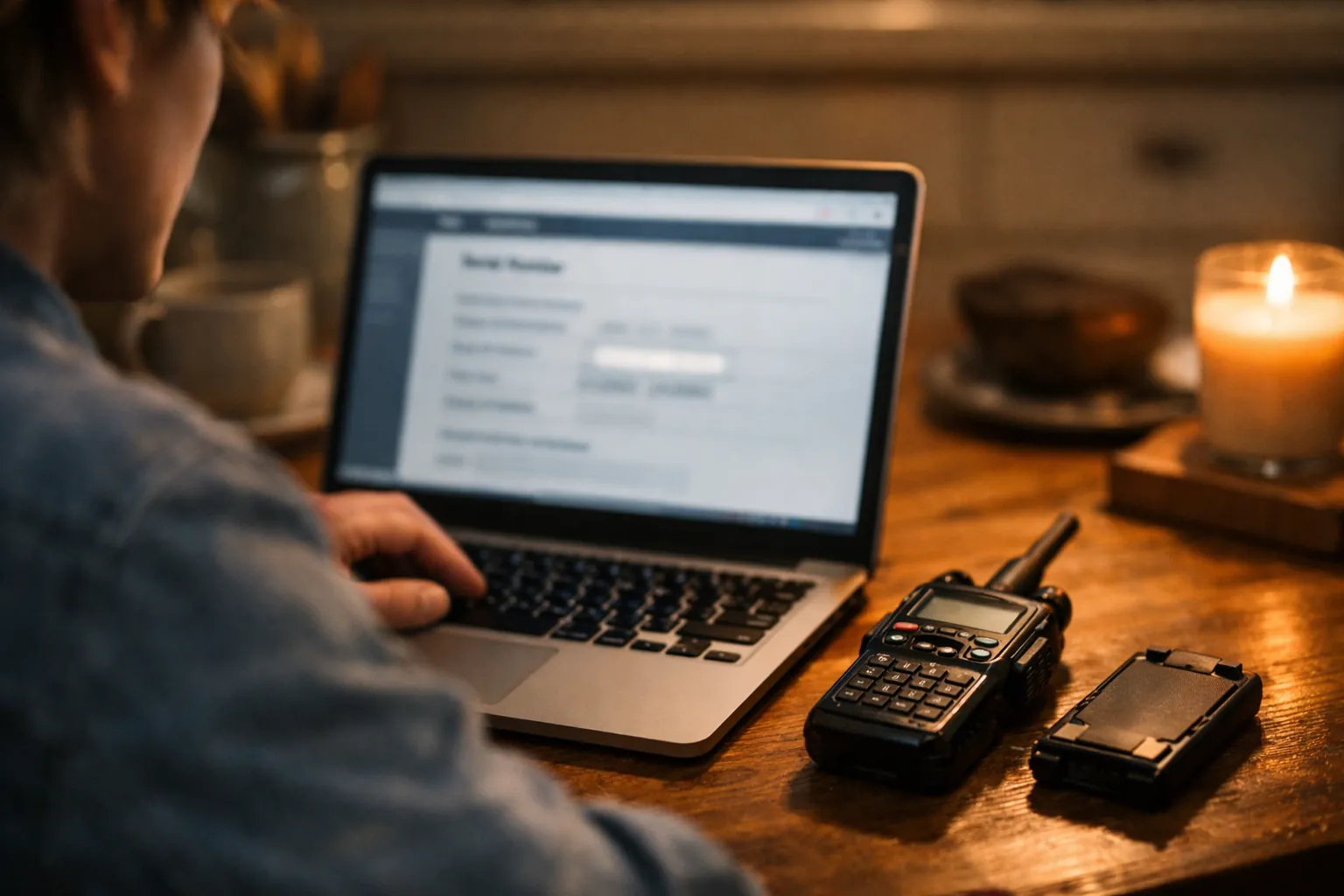
You already own a UV-5R. Now what?
Keep it. It's a capable radio for what it's certified and designed for:
- Get a Technician ham license and use it on the 2 m and 70 cm amateur bands. The exam is 35 questions and you need 26 right (47 CFR 97.503). Our ham radio for beginners guide starts there.
- Program the GMRS frequencies as receive-only memories and use it as a scanner for your family's channel. Our UV-5R CHIRP guide shows how to lock transmit off.
- Listen to NOAA weather broadcasts.
If you also hold a GMRS license, that doesn't let the UV-5R transmit on GMRS, and a ham license doesn't cover GMRS either. Our GMRS and ham license explainer walks through why. And if you're comparing ham handhelds, start with the UV-5R vs UV-K5 comparison.
Then get the license
Even a GMRS-certified Baofeng needs a GMRS license to transmit. The application fee is $35 (47 CFR 1.1102), and the FCC's fee page lists no separate regulatory fee. There's no test, it lasts 10 years, and it covers your immediate family (95.1705). Our step-by-step license guide walks through the FCC's online system.
Sources: 47 CFR 95.1761, 95.335, 95.1791, 95.1733, 95.1763, 95.1705, 97.503, 1.1102 (eCFR up to date as of October 1, 2026); FCC equipment grants via fccid.io; product specs from each Amazon listing. Rules and grants checked: October 3, 2026. How we research · Affiliate disclosure