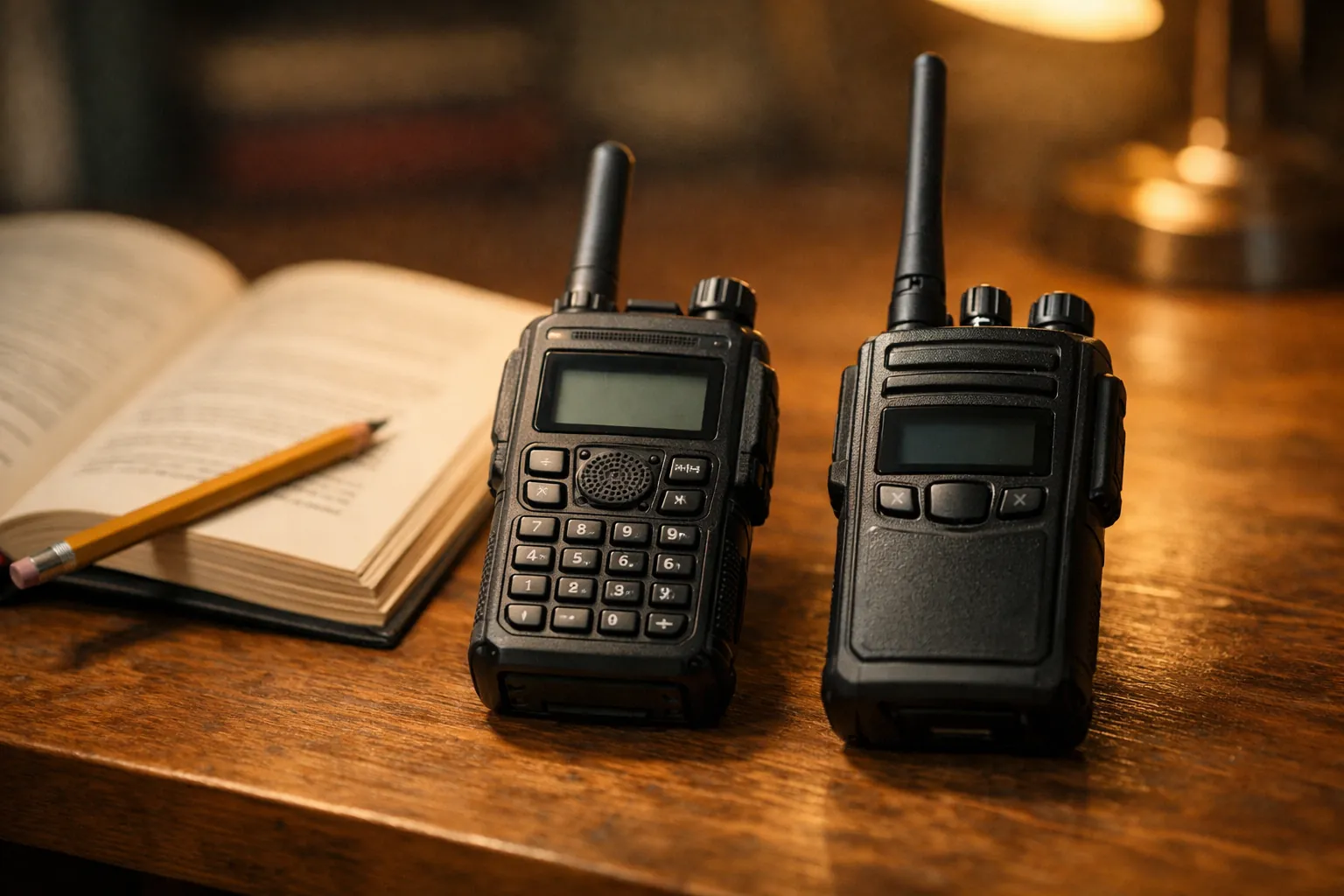
No. A ham (amateur) license doesn't let you transmit on GMRS, and a GMRS license doesn't let you transmit on ham bands. GMRS needs its own individual license under 47 CFR 95.1705, and a GMRS-certified radio. Your ham radio can't be that radio: the FCC won't certify a GMRS transmitter with amateur capability (95.1761(c)).
The three rules that settle it
- Separate license. "A valid individual license is required to operate a GMRS station" (95.1705). Amateur licenses are granted under Part 97 and authorize amateur stations on amateur frequencies (97.5). Neither mentions the other.
- Separate radios. Every GMRS transmitter must be certified for GMRS (95.1761(a)), and no GMRS transmitter will be certified if it can operate in services that don't require certification, "such as the Amateur Radio Service" (95.1761(c)). Using an uncertified transmitter voids your authority to operate (95.335).
- No chatting across. GMRS stations must not send messages to stations in the Amateur Radio Service, except emergency messages (95.1733(a)(9)).
Rule 2 trips up the most people. A dual-band ham handheld will often tune 462 MHz, and some are sold with GMRS channels pre-loaded. Tuning isn't the issue. Transmitting with it on GMRS is. Our page on whether you can use a Baofeng on GMRS shows how to check a specific radio's FCC grant.
GMRS vs ham at a glance
| GMRS | Amateur (ham), Technician | |
|---|---|---|
| Exam | None | Element 2: 35 questions, 26 to pass (97.503) |
| Age | 18 or older for a new license (95.1705(a)(1)) | No minimum age in Part 97 |
| FCC application fee | $35 (1.1102) | $35 (1.1102) |
| Term | 10 years (95.1705(e)) | Normally 10 years (97.25) |
| Family use | Immediate family can operate your station (95.1705(c)(2)) | Each control operator needs their own license (97.7) |
| Frequencies | 30 channels, 462-467 MHz (95.1763) | All amateur bands above 50 MHz, including 2 m and 70 cm, plus limited HF (97.301) |
| Radios | GMRS-certified only | Any amateur radio, including home-built |
| ID rule | End of conversation and every 15 minutes (95.1751) | End of each communication and at least every 10 minutes (97.119) |
The FCC fee page lists $35 for a new GMRS license and $35 for a new amateur license, with no separate regulatory fee for either. "No minimum age" means Part 97 sets none; 97.17 says any qualified person may apply.
The Technician frequency privileges are in 97.301(a) for VHF and UHF and in 97.301(e) for the limited HF segments. Our ham radio license levels page covers Technician, General and Extra. Every amateur band is listed in our ham radio band chart; GMRS isn't one of them.

It doesn't work the other way either
A GMRS license gives you no amateur privileges. You can't take a GMRS radio onto a ham repeater, and you can't use a ham radio on GMRS because you also hold a ham license. The radios are certified (or not) for a service, and the license is for a service. Both have to match what you're doing at that moment.
The one overlap is emergencies. 95.1733(a)(9) carves out emergency messages from the ban on GMRS-to-amateur traffic, and any licensee can let anyone send an emergency message on their GMRS station (95.1705(c)(3)). That's a narrow exception, not a reason to treat the services as one.
Why so many people hold both
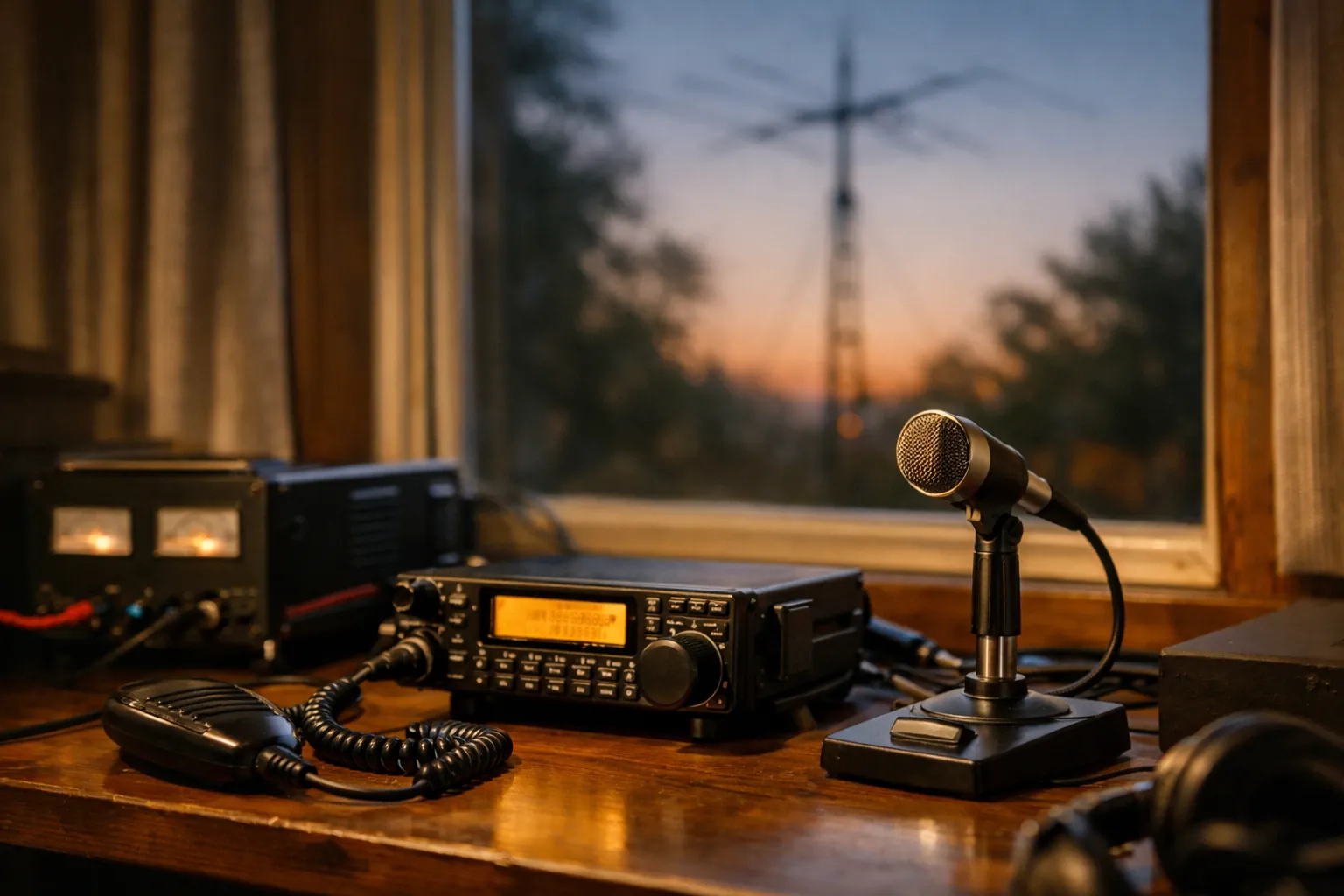
They solve different problems. GMRS is the family and group radio: one $35 license covers your spouse, kids, parents, siblings and in-laws, and their radios are simple. Ham radio is the hobby and long-reach radio: far more frequencies, far more repeaters, digital modes, and radios you can program however you like.
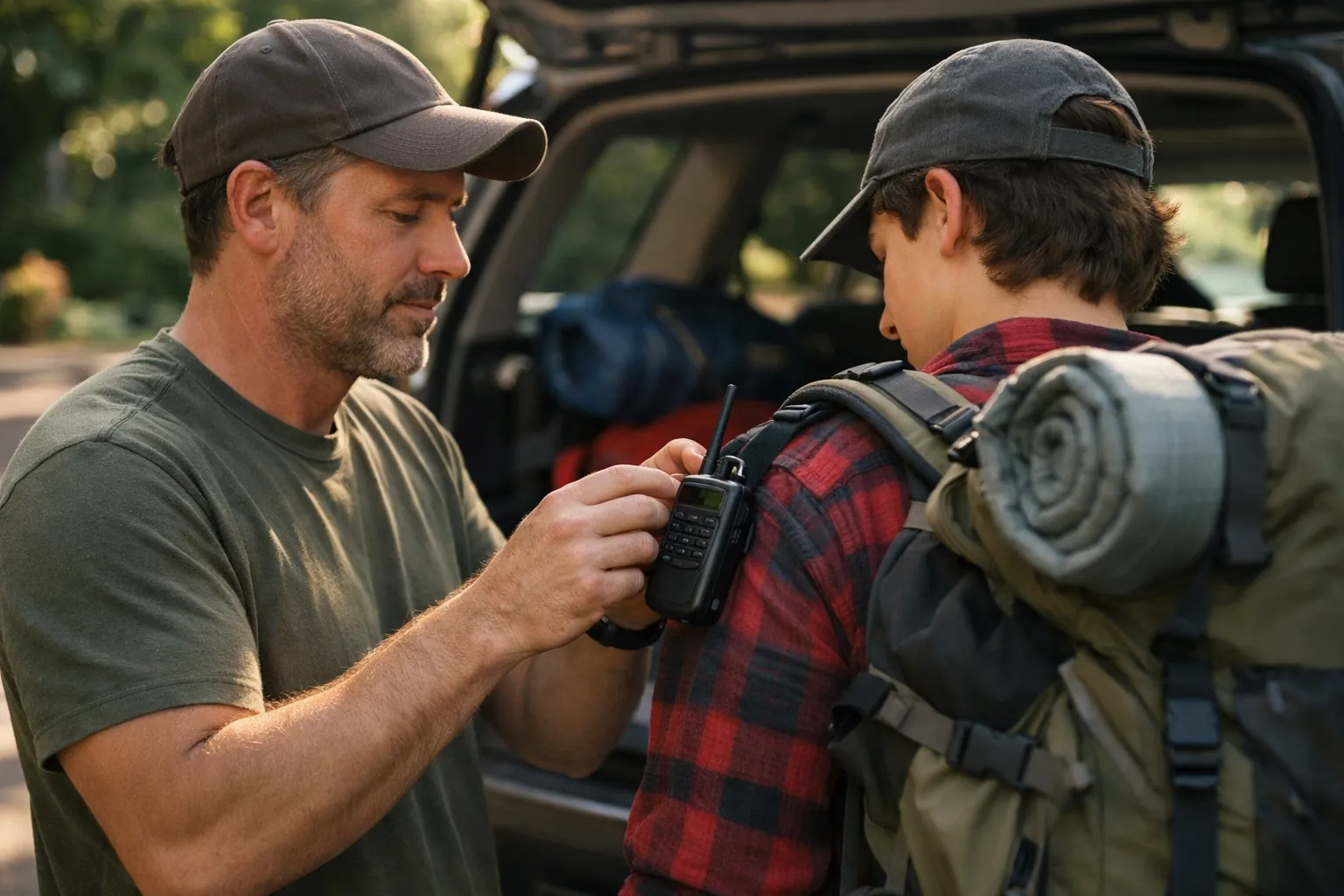
A typical setup for someone with both: GMRS handhelds for the family and a GMRS mobile in the car for trail and road trips, plus a ham handheld or mobile for the licensed operator's own use. In a vehicle, that's two radios and two antennas. Keep the GMRS channels out of the ham radio's memory so nobody grabs the wrong radio and transmits.
Four mix-ups we see often
"My ham radio came with GMRS channels programmed in, so it must be fine." Pre-loaded channels say nothing about certification. Look up the radio's FCC ID: a GMRS-legal radio has a grant under Part 95 Subpart E. Most dual-band ham handhelds don't.
"I'm a General class ham, so GMRS is beneath my license." License class doesn't matter. Even an Amateur Extra needs a separate GMRS license to transmit on GMRS, because the services are separate.
"I'll just use my ham call sign on GMRS." A GMRS station identifies with its GMRS call sign (95.1751). The ham call sign identifies an amateur station, on amateur frequencies.
"GMRS repeaters and ham repeaters are basically the same thing." The hardware is similar, but GMRS repeaters sit on the eight 467 MHz input channels with 462 MHz outputs (95.1763), and the owner decides who may use them (95.1705(d)). Ham repeaters are on amateur frequencies and follow Part 97. A GMRS radio can't reach a ham repeater, and the reverse isn't legal.
Which license to get first
| If you mainly want to... | Start with |
|---|---|
| Keep a family or trail group in touch | GMRS. How to get a GMRS license |
| Talk with people you haven't met, across a region | Ham Technician. Ham radio for beginners |
| Use cheap dual-band handhelds you already own | Ham Technician (those radios aren't GMRS-legal) |
| Have a plan for when phones are down | Both, eventually. GMRS first for the household |
If you're weighing all the options, including FRS and CB, our GMRS vs FRS vs CB vs ham comparison puts them side by side, and is GMRS VHF or UHF shows where each sits on the dial. If you decide to add a ham license, start with how to pass the Technician exam.
Sources: 47 CFR 95.1705, 95.1761, 95.335, 95.1733, 95.1751, 95.1763, 97.5, 97.119, 97.301, 97.503, 97.509, 97.25, 97.7, 1.1102 (eCFR, up to date as of October 1, 2026); FCC fee page. Rules checked: October 3, 2026. How we research · Affiliate disclosure