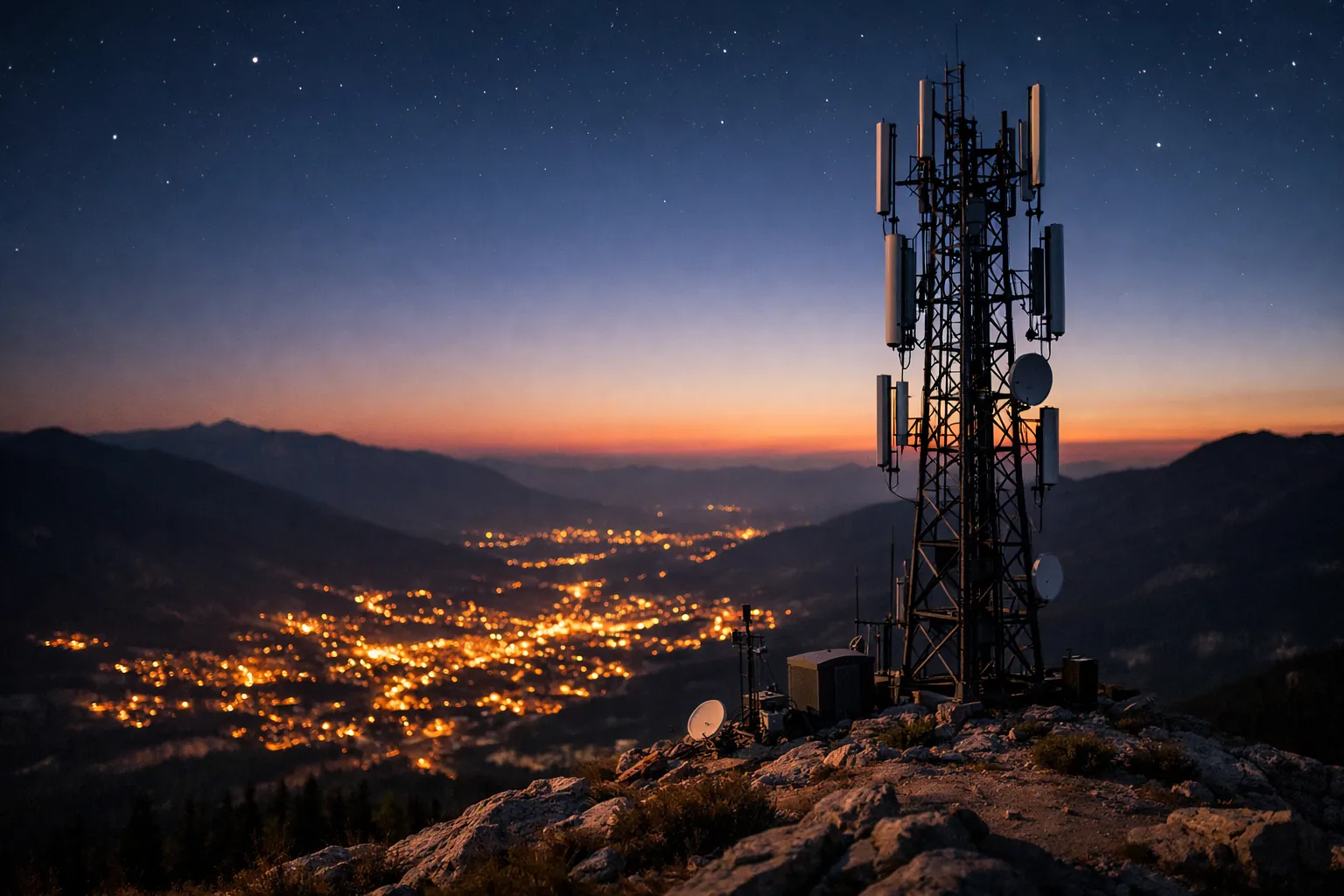
A GMRS repeater listens on a 467 MHz input and instantly retransmits on the paired 462 MHz channel from a high antenna, so radios that can't reach each other directly can talk through it. To use one you need a GMRS license, a repeater-capable GMRS radio, the repeater's channel and tone, and the owner's permission. Directories list most public repeaters; programming takes a minute once you know the four settings below.
How we checked this
The frequencies and the +5 MHz pairing come from 47 CFR 95.1763; repeater access rules from 95.1705(d); tones from 95.377; station identification from 95.1751. All read in the eCFR on October 3, 2026. How we research.
How a GMRS repeater works
Every GMRS repeater uses one of the eight 462 MHz main channels (15-22) as its output and the matching 467 MHz frequency as its input. Because repeaters sit high on towers, buildings or hills and usually run more power than a handheld, they cover a much wider area than any two radios on the ground. That's the single biggest range upgrade available to GMRS users; see GMRS radio range for the numbers.
| Channel | Repeater output (you receive) | Repeater input (you transmit) |
|---|---|---|
| 15 | 462.550 | 467.550 |
| 16 | 462.575 | 467.575 |
| 17 | 462.600 | 467.600 |
| 18 | 462.625 | 467.625 |
| 19 | 462.650 | 467.650 |
| 20 | 462.675 | 467.675 |
| 21 | 462.700 | 467.700 |
| 22 | 462.725 | 467.725 |
How to find GMRS repeaters near you
- Online repeater directories. Community-run sites such as myGMRS list repeaters by location, with channel, tone, coverage notes and whether the owner asks you to request access. Listings are maintained by owners, so details can be out of date.
- Local groups. Off-road clubs, county emergency groups and GMRS Facebook groups often run or know of repeaters that aren't listed publicly.
- Scan for activity. Set your radio to scan channels 15-22 and listen. If you hear a strong signal followed by a short "tail" when someone un-keys, it's probably a repeater. You'll still need its tone and the owner's OK to transmit.
The rules: license and permission
- You need your own GMRS license. The repeater owner's license covers the repeater, not your radio. If you don't have one yet, here's how ($35, no exam).
- The owner decides who uses it. Under 95.1705(d), a repeater licensee may let anyone use the repeater, limit it to specific people, or bar specific users. If a directory says "request access," do that first.
- Identify yourself. Say your call sign at the end of your conversation and every 15 minutes during a long one (95.1751).
How to set up your radio: the four settings
| Setting | What to enter | Example |
|---|---|---|
| Receive frequency | The repeater's output, one of channels 15-22 | 462.675 MHz |
| Transmit frequency / offset | +5 MHz (radio usually sets this when you pick a repeater channel) | 467.675 MHz |
| Transmit tone (CTCSS/DCS) | The tone listed for the repeater | 141.3 Hz |
| Receive tone | Optional; same tone, or off to hear everything | Off or 141.3 Hz |
The tone in the example is an illustration. Use the tone listed for your repeater.
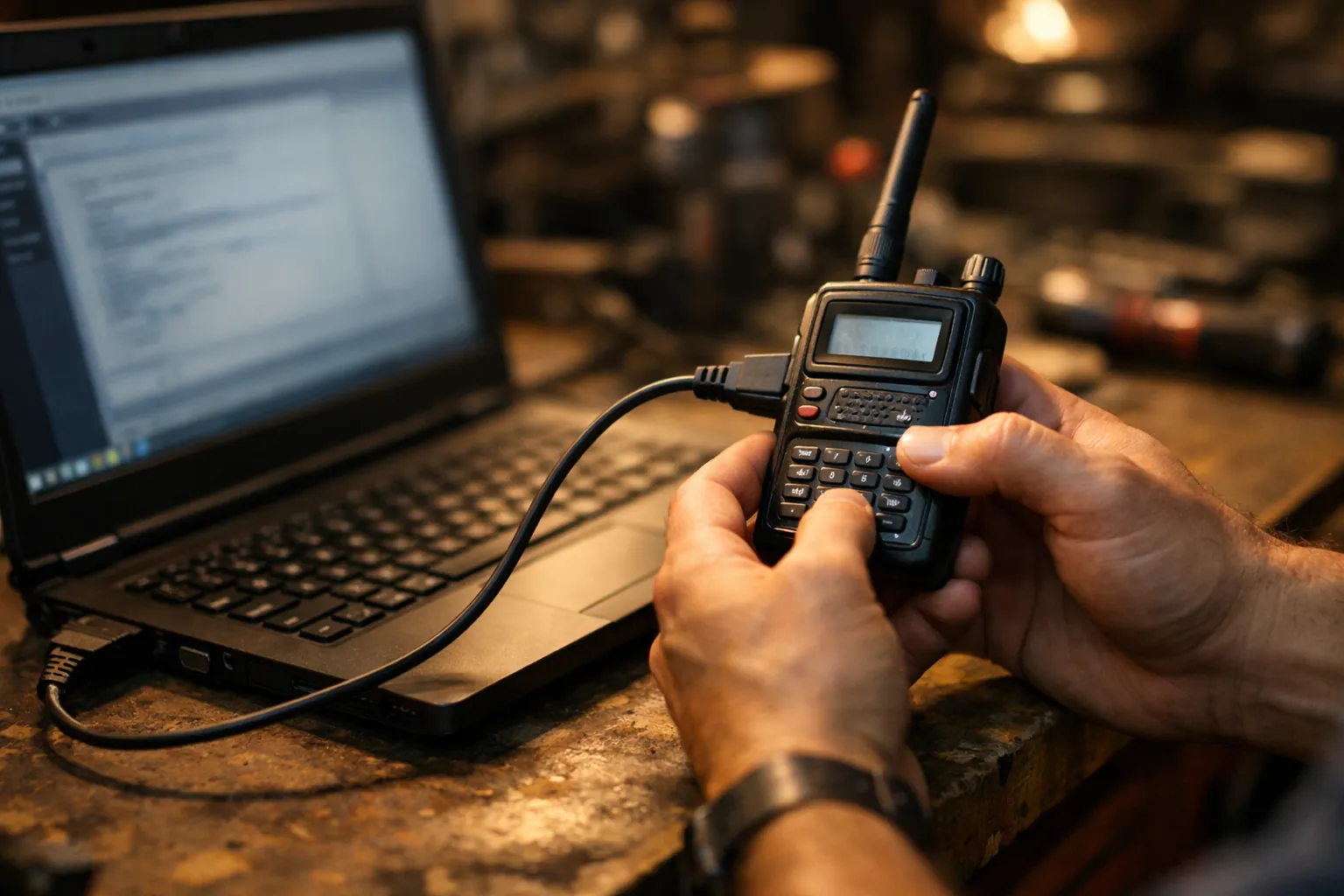
Radios name the repeater channels differently ("15R," "RPT," "Repeater channel 1"), so check your manual. Radios with a keypad or app, like the BTECH GMRS-PRO, make adding a tone quick; others need a programming cable and software. If you're buying, our best GMRS radio guide only includes repeater-capable models.
Repeater etiquette in five lines
- Listen first. If the repeater's busy, wait for a pause.
- Key up, wait a beat, then talk, so the repeater opens before your first word.
- Keep it short and leave gaps so others (and emergencies) can break in. Emergency traffic always has priority (95.1731).
- Say your call sign at the end.
- No music, no ads and no continuous transmissions (95.1733).
Troubleshooting
| Symptom | Likely cause | Fix |
|---|---|---|
| You hear the repeater but it won't key up | Wrong or missing transmit tone | Set the listed CTCSS/DCS tone on transmit |
| Nothing at all | Not on a repeater channel; out of range | Select the duplex/repeater version of the channel; get higher |
| Choppy audio from you | Weak signal into the repeater | Use high power, a better antenna or a mobile radio |
| You hear others talking over the tone | Receive tone off | Set a receive tone to filter other users |
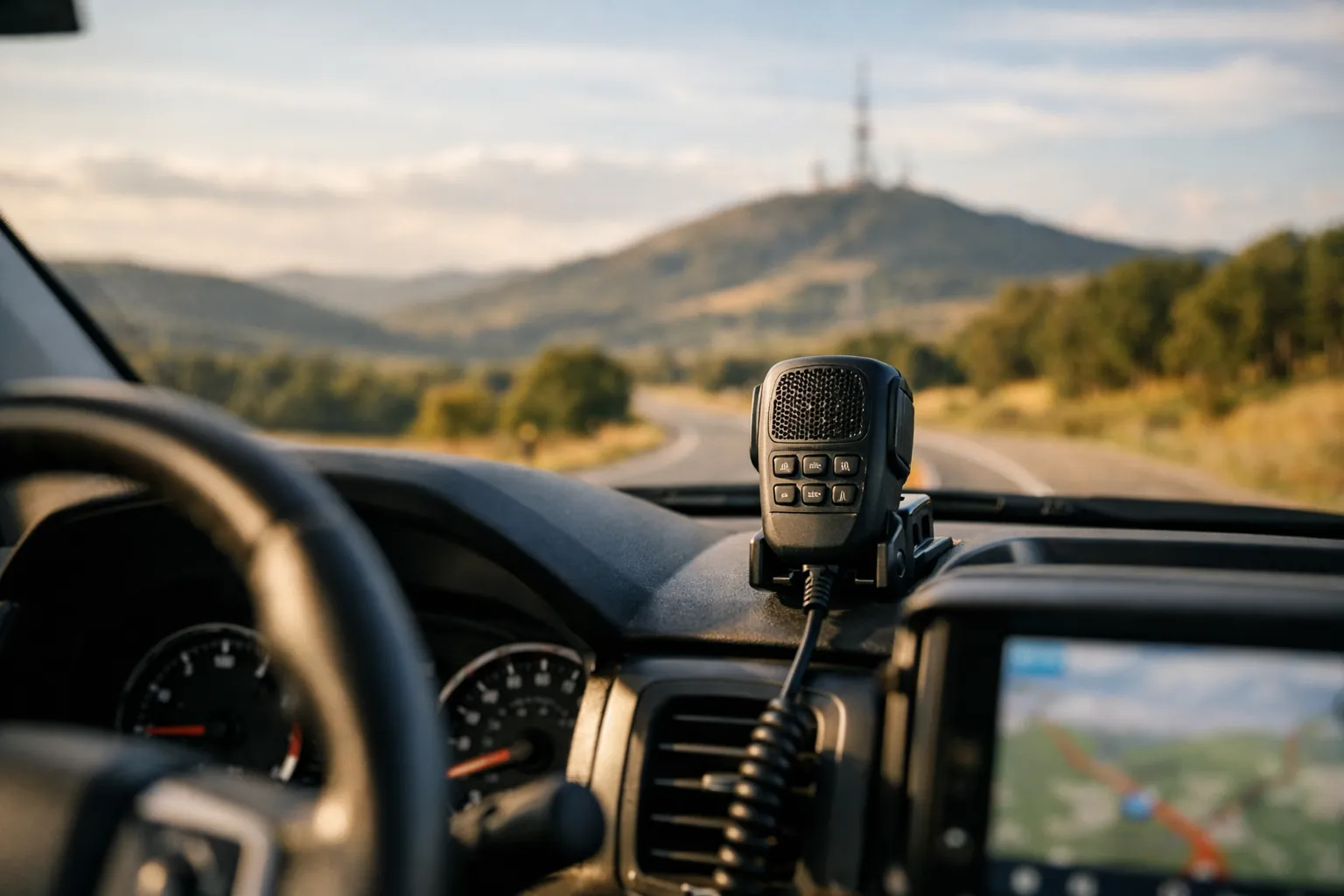
If handhelds can't reach a repeater reliably from your vehicle, a mobile radio like the Midland MXT275 with an outside antenna is the usual fix. No repeater nearby? You can set up your own.
The bottom line
Repeaters are the best thing about GMRS. Find one in a directory or through local groups, get the owner's OK, select the repeater channel (+5 MHz offset), add the right tone, and identify with your call sign. With a license and a repeater-capable radio, that's all it takes to turn a short-range handheld into a regional radio.
Rules checked against 47 CFR Part 95 Subpart E (eCFR, current through October 1, 2026) on October 3, 2026: 95.1763 · 95.1705 · 95.1751 · FCC GMRS. How we research · Affiliate disclosure