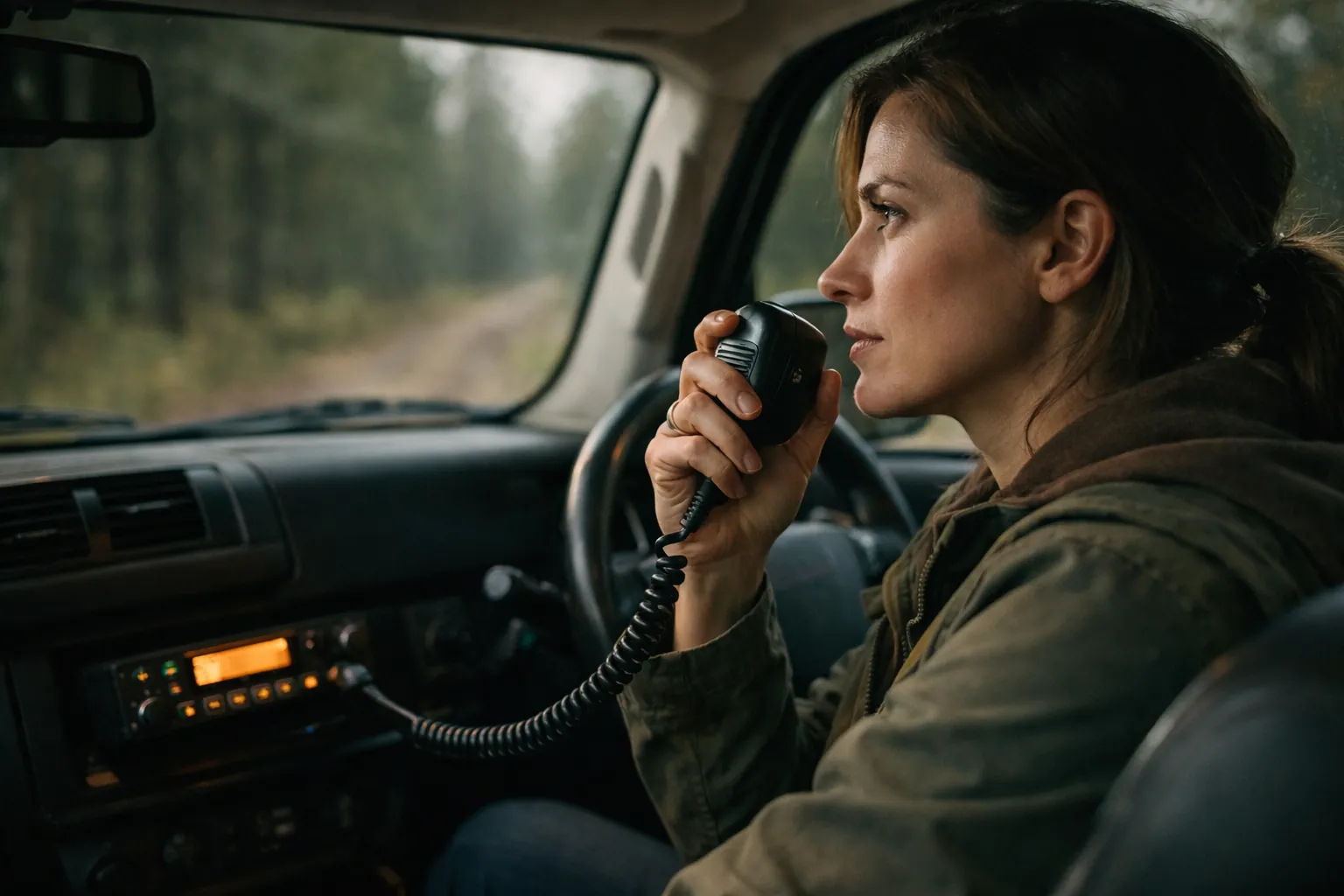
Four things are actually required on GMRS: identify with your call sign, keep transmissions to plain voice without music or hidden codes, don't hog the channel, and give emergencies priority. Everything else people call "etiquette" (listen first, say "over", don't kerchunk the repeater) is courtesy. Courtesy matters on 22 shared channels, but it helps to know which is which.
Required vs polite
The left column is the FCC's Part 95, current as of October 1, 2026. The right column is what experienced operators expect from you.
| What the FCC requires | Rule | What's just good manners |
|---|---|---|
| Say your call sign at the end of a transmission or conversation, and every 15 minutes in long ones | 95.1751 | Saying it at the start too, and using phonetics on a weak signal |
| No continuous or uninterrupted transmissions, except for immediate safety of life or property | 95.1733(a)(10) | Leaving a second or two between exchanges so others can break in |
| Keep transmissions to the minimum length necessary | 95.357 | Moving a long chat off a busy repeater to a simplex channel |
| Channels are shared; cooperate in choosing them to avoid interference | 95.359 | Listening for a minute before you transmit |
| Give emergency communications priority on every channel | 95.1731(a) | Standing by quietly when someone is working an emergency |
| No music, whistling, sound effects or entertainment | 95.1733(a)(4) | No dead-key "open mic" jokes |
| No coded messages (10-codes are allowed) | 95.1733(a)(3) | Plain language anyway, so strangers can help |
| No advertising goods or services | 95.1733(a)(5) | No "anyone want to buy a lift kit" on the repeater |
| No obscene or profane language; no intentional interference | 95.333 | Keeping it family-friendly, since kids are on these channels |
| The repeater's licensee decides who may use it | 95.1705(d) | Asking the owner before you program it in |
Before you press the button
Listen. On a repeater, give it a full minute, because conversations have gaps. Check that your tone is right, too: if your radio is set to a CTCSS or DCS code, it filters out everyone not using that code, so a channel can sound empty when it isn't. Many radios have a monitor button that opens the squelch so you hear everything. Our CTCSS and DCS tone chart explains how those codes work.
Then think about what you'll say before you key up. Half of all channel clutter is people deciding mid-sentence.
Scripts you can use
None of these wordings is required. They're short, clear and they include the call sign where the rule wants it. WRXX123 is a made-up example.
| Situation | What to say |
|---|---|
| Calling a specific person (simplex) | "Kate, this is Mike." Wait. When done: "Okay, see you at six. WRXX123." |
| Radio check | "Radio check, this is WRXX123. How do you copy?" Wait 30 seconds before repeating. |
| Answering a radio check | "WRXX456, I copy you loud and clear in town. WRXX123." |
| Joining a repeater | "WRXX123 monitoring." Or, to reach someone: "Kate, Mike on the hill repeater, WRXX123." |
| Breaking into a conversation | Wait for a gap, then say your call sign once: "WRXX123." Let them acknowledge you. |
| Emergency break | "Break, emergency." Everyone else stops. See our GMRS emergency guide for the full script. |
| Family member on your license | "WRXX123 unit 2, home safe." |
Radio checks and short test calls are explicitly allowed. 95.1731(b)(3) permits brief test transmissions, and 95.319(c) allows them at any time as long as they don't interfere with other stations. Once is enough. Ten radio checks in a row is the opposite of brief.
The call sign rules in detail, including how unit numbers work for families, are on our GMRS call sign page.
Repeater manners
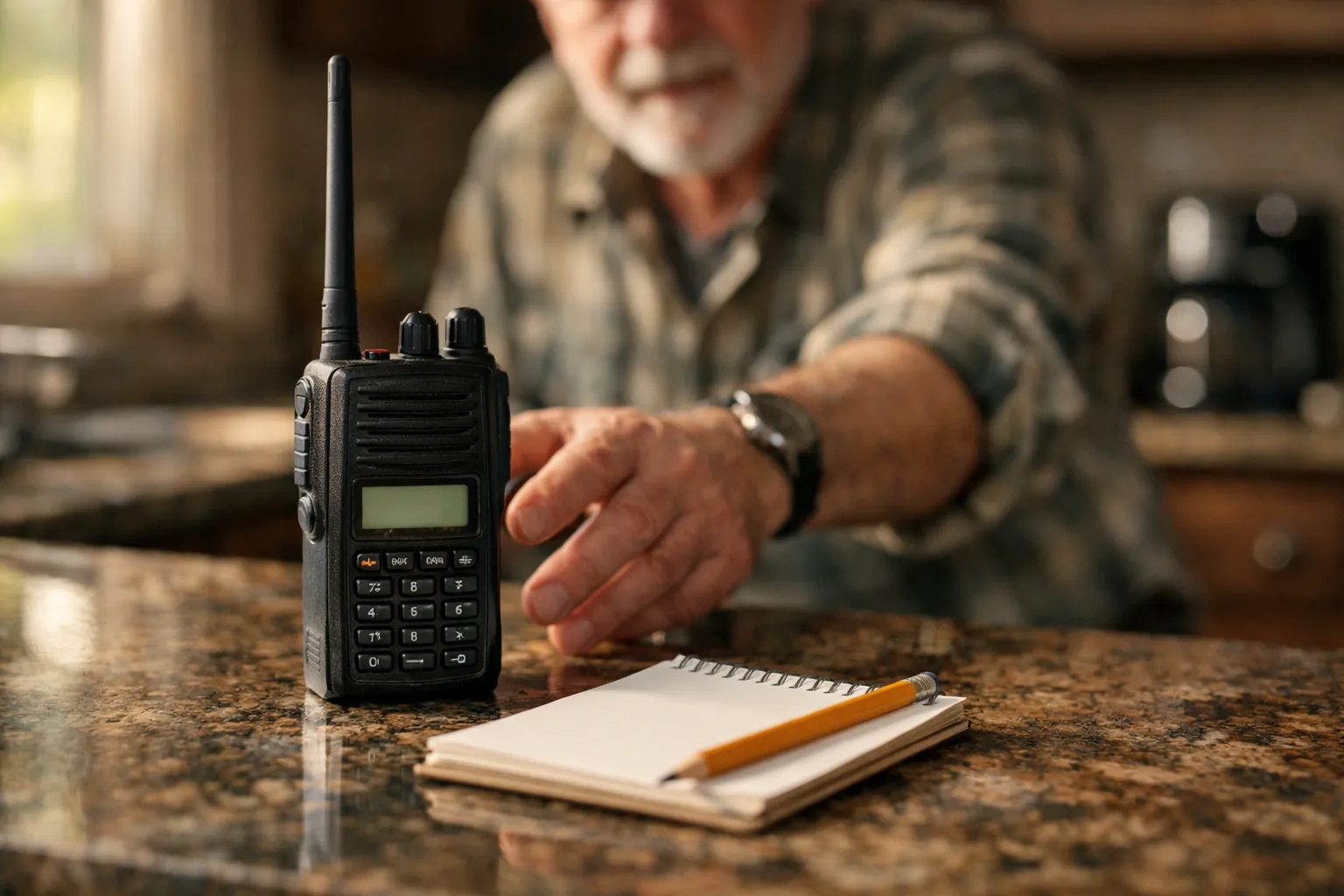
A repeater belongs to someone who paid for the radio, the antenna, the coax and often the tower space. The FCC gives that licensee the say over who uses it (95.1705(d)(2) and (d)(3)). Most owners are happy to share. Here's how to stay welcome:
- Ask first if the listing says to. Many repeaters on directories like myGMRS state whether the owner wants a request.
- Pause between exchanges. Let go of the button, count to two, then answer. That gap is where someone with an emergency gets in.
- Don't kerchunk. A one-second key-up with no voice tells nobody anything. And because 95.1751(a)(1) requires your call sign after a single transmission, a silent kerchunk is also an ID slip.
- Keep it short when the repeater is busy. Two people chatting for an hour on the only repeater in the county will get noticed.
- Move to simplex when you can. If you can hear each other directly, you don't need the repeater.

Tone settings, offsets and how to find repeaters near you are in our guide to finding and using GMRS repeaters.
On the trail and in a convoy
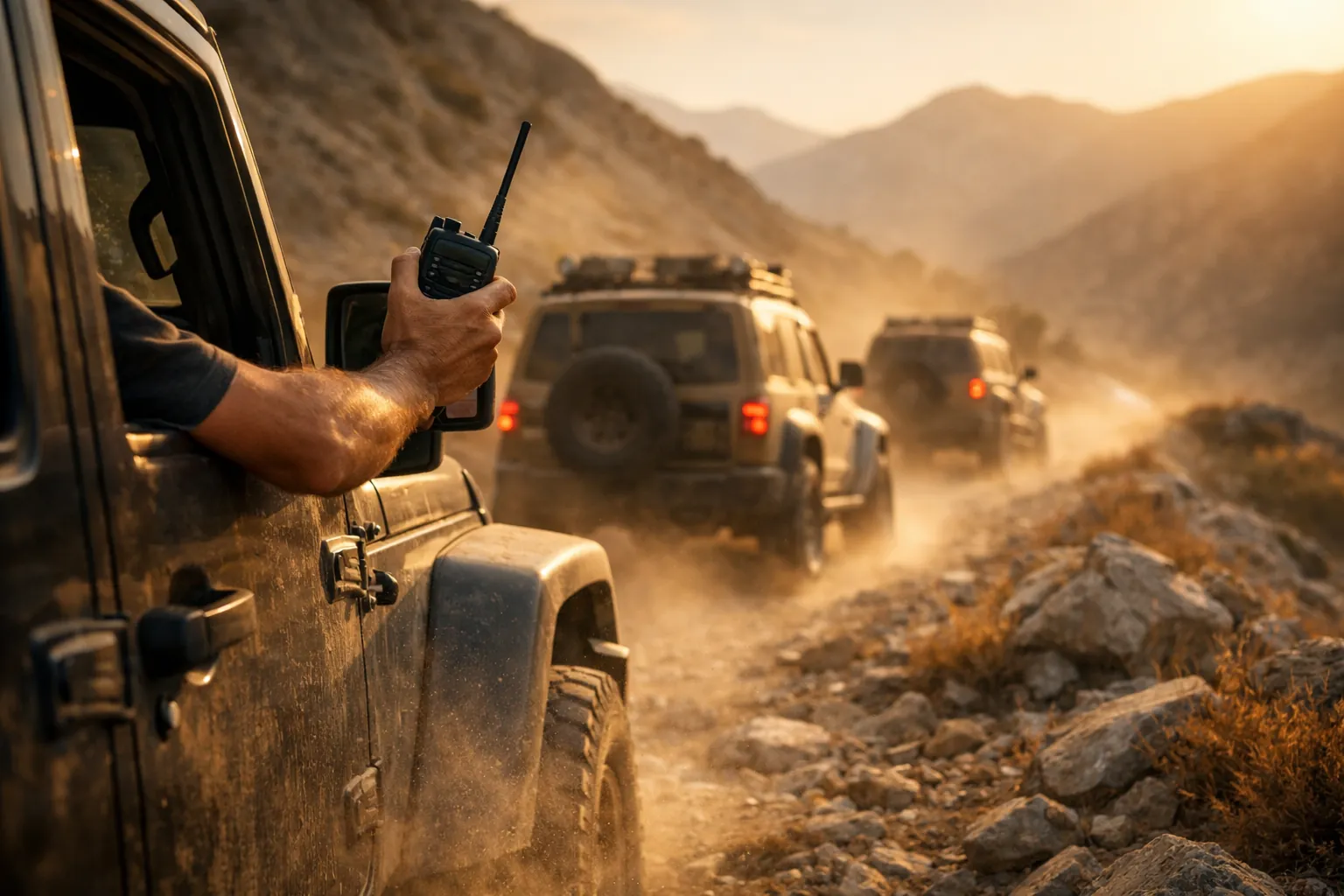
Convoys have their own habits: the leader calls hazards back ("rock on the left at the creek"), the tail confirms the group is through, and everyone else keeps quiet unless they need to stop. Agree on the channel and tone before you leave the trailhead, and remember that a mobile radio can't use channels 8 to 14, which are reserved for handhelds (95.1763(d)). Our off-road convoy radio channels guide has a full plan.
Habits that annoy everyone
Holding the mic open while you think. Cutting in on the end of someone's sentence because you keyed up too early. Calling the same person every ten seconds when they don't answer (try three calls, a minute apart, then wait). Talking over a repeater's courtesy beep. And the classic: a stuck talk button in a cup holder broadcasting a whole car ride. 95.1733(a)(10) bars continuous transmissions, and everyone on the channel will hear your playlist and your argument about directions.
If you're new, the best etiquette lesson is free: listen on your local repeater for a week before you transmit on it. You'll pick up how the regulars talk faster than from any list.
Sources: 47 CFR 95.1751, 95.1733, 95.1731, 95.1705, 95.1763, 95.357, 95.359, 95.333, 95.319 (eCFR, up to date as of October 1, 2026). Rules checked: October 3, 2026. How we research · Affiliate disclosure