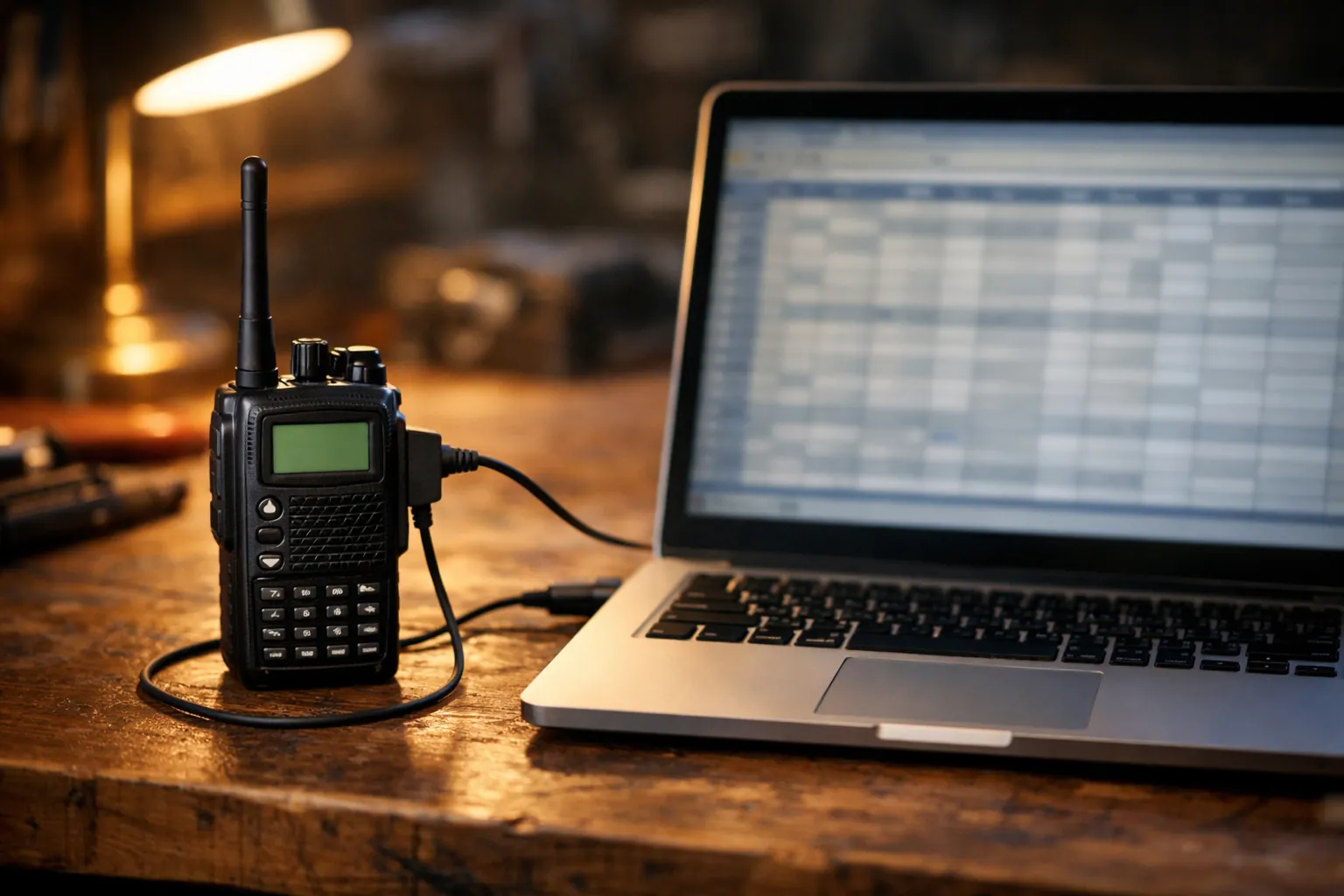
Below is the full list of 50 standard CTCSS tones, with the privacy code number most FRS and GMRS radios use for each (codes 1 to 38) and Motorola's PL code. Under it are the 104 DCS codes. The one GMRS users ask about most is 141.3 Hz: privacy code 22 on many radios, Motorola PL 4A, and the "travel tone" some groups use on channel 20 (a convention, not an FCC rule).
CTCSS tone chart
Read across: if your radio shows privacy code 22, it's sending 141.3 Hz. "None" means the tone isn't in the common 38-code list, so a bubble-pack radio can't send it. Radios you program by computer usually let you pick any of the 50.
| Tone (Hz) | Privacy code (38-code list) | Motorola PL code |
|---|---|---|
| 67.0 | 1 | XZ |
| 69.3 | none | WZ |
| 71.9 | 2 | XA |
| 74.4 | 3 | WA |
| 77.0 | 4 | XB |
| 79.7 | 5 | WB |
| 82.5 | 6 | YZ |
| 85.4 | 7 | YA |
| 88.5 | 8 | YB |
| 91.5 | 9 | ZZ |
| 94.8 | 10 | ZA |
| 97.4 | 11 | ZB |
| 100.0 | 12 | 1Z |
| 103.5 | 13 | 1A |
| 107.2 | 14 | 1B |
| 110.9 | 15 | 2Z |
| 114.8 | 16 | 2A |
| 118.8 | 17 | 2B |
| 123.0 | 18 | 3Z |
| 127.3 | 19 | 3A |
| 131.8 | 20 | 3B |
| 136.5 | 21 | 4Z |
| 141.3 | 22 | 4A |
| 146.2 | 23 | 4B |
| 151.4 | 24 | 5Z |
| 156.7 | 25 | 5A |
| 159.8 | none | - |
| 162.2 | 26 | 5B |
| 165.5 | none | - |
| 167.9 | 27 | 6Z |
| 171.3 | none | - |
| 173.8 | 28 | 6A |
| 177.3 | none | - |
| 179.9 | 29 | 6B |
| 183.5 | none | - |
| 186.2 | 30 | 7Z |
| 189.9 | none | - |
| 192.8 | 31 | 7A |
| 196.6 | none | - |
| 199.5 | none | - |
| 203.5 | 32 | M1 |
| 206.5 | none | 8Z |
| 210.7 | 33 | M2 |
| 218.1 | 34 | M3 |
| 225.7 | 35 | M4 |
| 229.1 | none | 9Z |
| 233.6 | 36 | M5 |
| 241.8 | 37 | M6 |
| 250.3 | 38 | M7 |
| 254.1 | none | 0Z |
Tones and PL codes from Mike Morris WA6ILQ's CTCSS tone number chart at repeater-builder.com. The privacy code column matches the tables in the Midland GXT1000 owner's manual and the Rocky Talkie Expedition manual, both checked October 3, 2026. Some manuals list 67.0 as 67.1 and 69.3 as 69.4. A dash means no Motorola code is listed.
That 38-code privacy list is the EIA/TIA RS-220 standard's 37 tones plus 97.4 Hz, per the repeater-builder chart. It's common, but it isn't universal. Older radios and a few brands number differently, so check your manual before you trust a code number. Our GMRS privacy codes guide shows how Midland and Rocky Talkie numbers line up.
DCS code list
These are the 104 DCS codes in the Midland GXT1000 manual, sorted in order. Codes are octal numbers, written with a D in front in most programming software.
| D023 | D025 | D026 | D031 | D032 | D036 | D043 | D047 |
| D051 | D053 | D054 | D065 | D071 | D072 | D073 | D074 |
| D114 | D115 | D116 | D122 | D125 | D131 | D132 | D134 |
| D143 | D145 | D152 | D155 | D156 | D162 | D165 | D172 |
| D174 | D205 | D212 | D223 | D225 | D226 | D243 | D244 |
| D245 | D246 | D251 | D252 | D255 | D261 | D263 | D265 |
| D266 | D271 | D274 | D306 | D311 | D315 | D325 | D331 |
| D332 | D343 | D346 | D351 | D356 | D364 | D365 | D371 |
| D411 | D412 | D413 | D423 | D431 | D432 | D445 | D446 |
| D452 | D454 | D455 | D462 | D464 | D465 | D466 | D503 |
| D506 | D516 | D523 | D526 | D532 | D546 | D565 | D606 |
| D612 | D624 | D627 | D631 | D632 | D654 | D662 | D664 |
| D703 | D712 | D723 | D731 | D732 | D734 | D743 | D754 |
From the Midland GXT1000 owner's manual (11-5-25). The Rocky Talkie Expedition manual lists the same codes, split into codes 39 to 121 and repeater-only codes 135 to 155.
DCS numbering is where brands disagree. Midland numbers its DCS codes 1 to 104 in its own order, starting at 023. Rocky Talkie numbers the same 023 as code 39. Always match the three-digit code, never the menu number.
How tones work, in one diagram
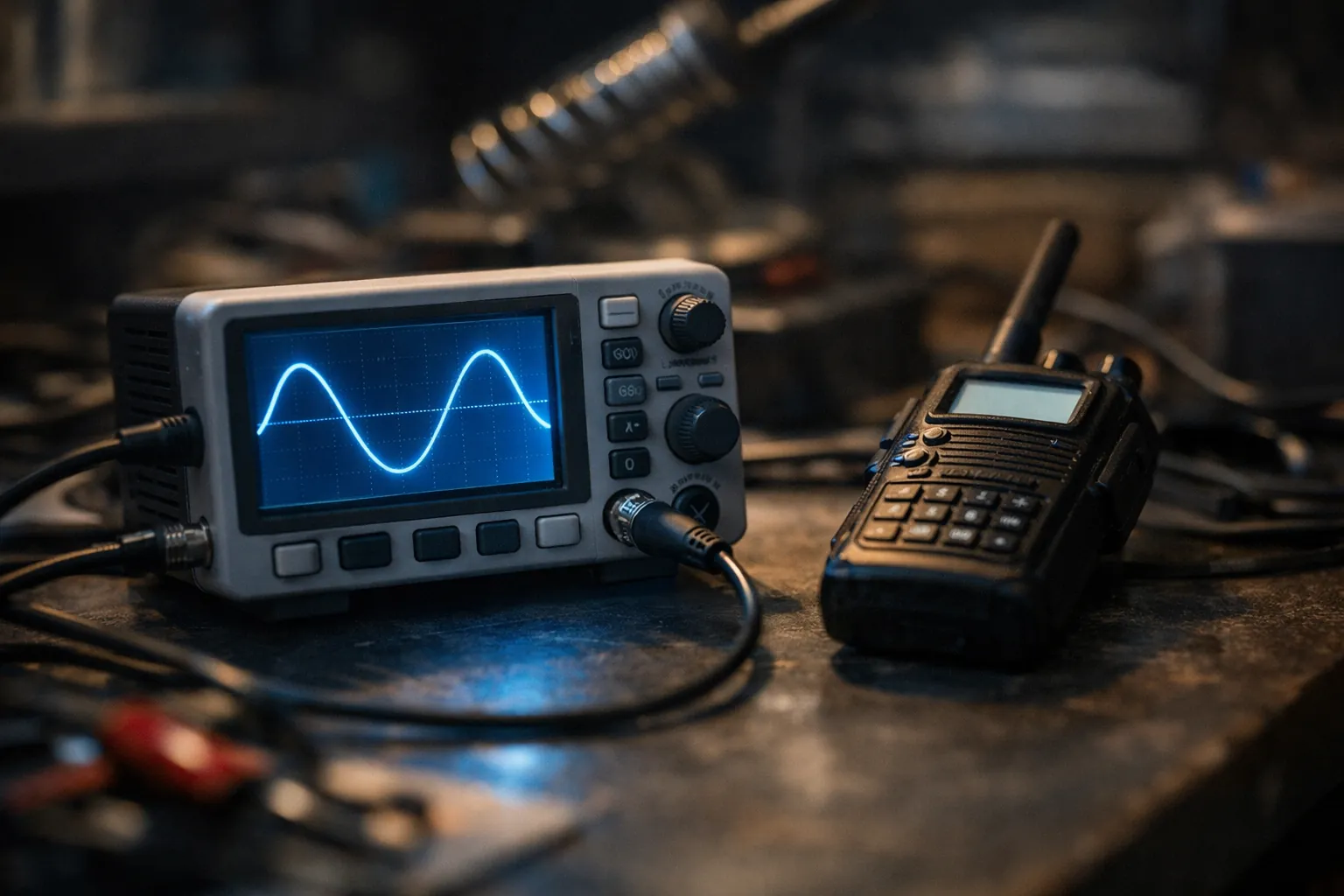
In FCC terms, these are "subaudible tones used for receiver squelch activation and selective calling" (47 CFR 95.1777). Tones at 300 Hz or lower may be sent continuously during a conversation, while audible tones above 300 Hz are limited to 15 seconds at a time (95.377). Every tone in the chart above is under 300 Hz.
Tones are not encryption. Anyone on the channel with tones off hears you. GMRS rules prohibit coded messages or messages with hidden meanings (95.1733(a)(3)).
How GMRS users use tones
| Use | Tone | Status |
|---|---|---|
| Repeater access | Whatever the repeater owner sets | Set by the owner; listed in repeater directories |
| Travel tone on channel 20 (462.675 MHz) | 141.3 Hz (privacy code 22 on many radios) | Convention, not an FCC rule |
| Your family or group | Any tone everyone's radio can send | Your choice; codes 1 to 38 are the safest across brands |
| Listening for emergencies | Tones off | Practical advice: a tone mutes callers who don't use it |
The 141.3 Hz convention shows up on various GMRS websites as a "national calling" or traveler-assistance setup, as the Wikipedia GMRS article notes. Nothing in the FCC's GMRS rules designates a tone or a channel for it. Our GMRS emergency channel guide explains what the rules actually say about emergency traffic.
Tones and repeaters
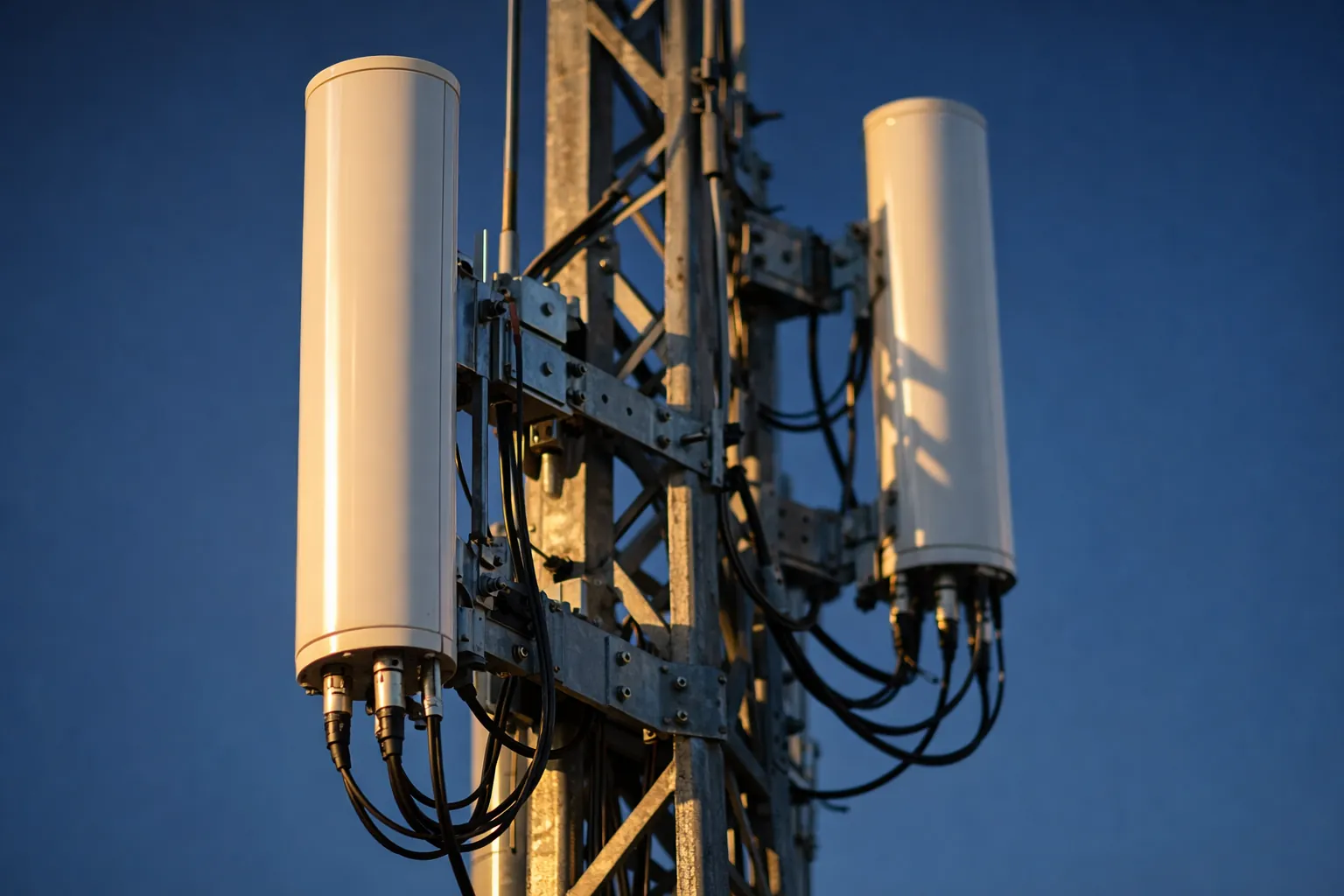
A repeater listens on a 467 MHz input and retransmits on the matching 462 MHz output (95.1763). Put another way, your radio transmits 5 MHz above the frequency it listens on. Most repeaters require an input tone, and some also send a tone on the output so your radio's squelch only opens for the repeater. Three settings have to be right:
- Receive frequency: the 462 MHz output, for example 462.675 for channel 20.
- Transmit offset: +5 MHz, so you transmit on 467.675.
- Transmit tone: the CTCSS tone or DCS code the owner publishes. Receive tone is optional.
Our guide to finding and using GMRS repeaters covers permission and directories. If you program with a computer, how to program a GMRS radio with CHIRP shows where the tone and offset columns go.
Tips that save a trip back to the trailhead
- Tell people the tone in hertz, not the code number. "141.3" works on every radio; "code 22" works on most.
- Check the mode. A radio set to DCS won't talk to one set to CTCSS, even if the numbers match.
- Use the monitor button. It opens the squelch so you can hear whether the channel is busy before you transmit.
- Write it down. The printable GMRS frequency chart has a line for your group's channel and tone.
Sources: 47 CFR 95.1777, 95.377, 95.1733, 95.1763 (eCFR, up to date as of October 1, 2026); repeater-builder.com CTCSS chart; Midland GXT1000 and Rocky Talkie Expedition manuals; Wikipedia GMRS article (conventions). Rules checked: October 3, 2026. How we research · Affiliate disclosure